


How to Blend Carpet and Wood Flooring: Tips for Modern Interiors (2026)
April 27, 2026
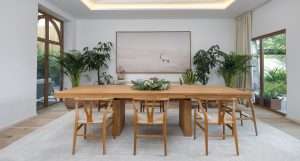
Hattan Villa The Lakes light oak flooring paired with a neutral carpet layered to define the dining zone.
There is a particular kind of interior that feels fully resolved, where every material has been chosen with intention and where softness and structure exist in balance. In many contemporary homes, this balance is achieved through the considered combination of carpet and wood flooring.
Together, these materials allow different parts of the home to perform in different ways. They define zones, create contrast, and give a space a layered quality that a single material rarely achieves on its own.
Understanding the Role of Each Material
Before combining carpet and wood flooring within a single space, it is important to understand what each material contributes on its own. Their differences are not incidental; they are what make the combination effective.
What Wood Flooring Brings to a Space
Wood flooring defines the architecture of a room. Its continuity across open areas creates visual flow, while its surface reflects light in a way that makes spaces feel larger and more resolved. In corridors, dining areas, and living rooms, it provides a stable foundation that allows furniture and objects to take centre stage.
Engineered wood flooring offers the additional advantage of dimensional stability. A well-specified engineered floor remains consistent across changes in humidity and indoor climate, supporting long-term performance in ways that solid wood cannot always guarantee.
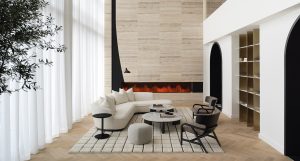
Sterling Tower Penthouse Business Bay Oak Herringbone paired with a soft rug to define the living space.
What Carpet Adds to the Interior
Carpet does something wood cannot: it absorbs. Sound, footfall, and the harshness of hard surfaces all soften the moment carpet enters a space. In bedrooms, this shift is immediate, turning the room into something quieter and more contained. In private lounges or media rooms, its acoustic properties become actively functional, helping to create a sense of intimacy.
Carpet also introduces a different kind of comfort underfoot. In cooler interiors, it provides a level of warmth that hard flooring cannot replicate, without affecting the overall temperature of the room.
This balance between softness and structure underpins many contemporary carpet ideas, where comfort is introduced without compromising the clarity of the overall space.
Where Carpet and Wood Flooring Work Best Together
The effectiveness of combining carpet and wood flooring depends on where and how each material is used within the home.
Bedrooms
Carpet is often most effective in more private spaces, where comfort underfoot and acoustic softness matter more. A common approach is to run engineered wood flooring through the corridor and stop at the threshold, transitioning to full carpet within the bedroom. Alternatively, wood flooring can continue throughout, with a large-format rug defining the sleeping zone. The choice depends on the scale of the room and the level of softness required.
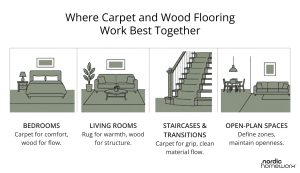
Living Rooms
In more social areas, carpet is typically introduced through an area rug rather than as a full surface. The wood floor remains continuous, providing structure and ease of maintenance, while a generously sized rug beneath the seating area creates definition and warmth within the living room. Scale is critical. A rug that is too small will sit awkwardly and disrupt the coherence of the space.
This approach is common in modern carpet and wood flooring combinations, where the carpet softens the space without interrupting the visual continuity of the floor.
Staircases and Transitions
Combining carpet and wood across levels offers both practical and visual advantages. Carpet introduces grip underfoot, improving safety on stairs, while a clean transition between materials creates a more intentional movement through the home. A carpet runner on a wooden staircase, with the wood nosing left visible, is a particularly considered solution.
Open-Plan Spaces
In larger layouts, the combination becomes a way to organise space. Flooring can replace the walls that are absent, with wood flooring anchoring one area and a carpet or rug defining another. This allows for separation without interruption, creating a layout that feels both open and clearly structured.
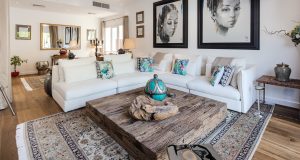
The Meadows Villa Meadows 9 Oak Tramonto flooring paired with a layered carpet to define the seating layout.
Design Principles for Blending Carpet and Wood Flooring
The success of combining carpet and wood flooring depends on a small number of design decisions made early and applied consistently.
Maintain a Consistent Colour Palette
The most common issue when combining materials is tonal conflict. A warm oak floor placed against a cool grey carpet creates a visual tension that cannot be resolved through furniture alone. The materials need to sit within the same tonal family, whether in a warm palette of creams and natural oak tones, or a cooler scheme of pale ash and soft greys.
In practical terms, lighter wood floors tend to pair well with soft neutrals and muted earth tones, while darker floors are often balanced with lighter carpets to prevent visual heaviness. When tonal relationships are resolved early, the space reads as cohesive rather than assembled.
Work with Texture, Not Just Colour
Once tonal alignment is in place, texture becomes the next point of variation. The contrast between a smooth wood surface and the pile of a carpet introduces depth without adding visual complexity. This approach creates interest in a controlled way and is more reliable than relying on pattern or colour contrast.
Keep Transitions Clean and Intentional
The junction between carpet and wood flooring is where the quality of the decision becomes most visible. A flush transition, where both materials meet at the same height with a clean seam, reads as intentional. An uneven junction or bulky threshold does not. This is a detail determined by installation quality, and it has a direct impact on how resolved the final space feels.
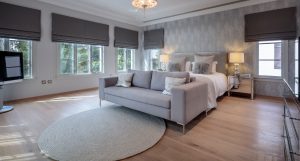
Flame Tree Ridge Villa Jumeirah Golf Estates Oak Dew flooring paired with a soft carpet for a defined bedroom setting.
Respect Proportions and Scale
A rug must be large enough to anchor the furniture it sits beneath. At a minimum, the front legs of each piece should sit on it; ideally, the entire seating arrangement is contained within its boundary. When a rug is too small, the space feels disconnected. Proportion is what holds the composition together.
How to Choose Materials for Long-Term Flooring Performance
Material selection determines how well the combination performs over time, not just how it looks on completion.
Selecting Durable Wood Flooring
Engineered wood is a reliable specification for most residential settings. Its layered construction limits movement caused by changes in humidity, supporting a more stable floor over time. Modern boards offer the same range of formats and finishes as solid wood, with performance determined largely by the thickness of the wear layer and the finish applied.
Selecting the Right Carpet Type
Material choice has a direct impact on how carpet wears and ages. Wool, in particular, maintains its appearance well and performs consistently in lower-traffic spaces such as bedrooms and private lounges. In more demanding areas, a wool-synthetic blend offers a more durable alternative. The specification should reflect how the space is actually used.
Compatibility Between Materials
Where carpet and wood flooring meet, height compatibility is a practical consideration. Carpet, when installed with underlay, typically sits slightly higher than wood. This difference can be managed, but it needs to be addressed during specification rather than after installation. A well-planned transition ensures both materials sit cleanly at their finished levels.
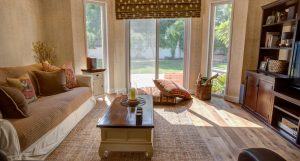
Green Community Bungalow Dubai Investments Park Oak Siena flooring with a textured carpet defining the seating area.
Common Mistakes When Combining Carpet and Wood Flooring
Most issues with mixed-material flooring trace back to a small number of recurring decisions, often made too quickly or without considering how the materials will work together over time:
- Competing undertones that create visual tension across the space
- Poorly resolved transitions where height or detailing has not been properly planned
- Rugs that are too small to anchor the furniture they are meant to define
- Inappropriate material selection in high-use areas, leading to premature wear
- Overcomplicated layouts with too many materials or unnecessary transitions
Each of these issues is avoidable when the relationship between materials is considered early in the design process. When colour, proportion, and transition details are resolved before installation begins, the result tends to read as intentional rather than assembled.
Practical Considerations for Everyday Living
Environmental conditions and daily use have a direct impact on how carpet and wood flooring perform over time. In heavily cooled interiors, carpet introduces a level of warmth underfoot that hard flooring does not provide, while wood remains easier to maintain in spaces where dust and daily activity are more constant.
Material placement should reflect how each area is used. In higher-traffic zones, wood flooring tends to perform more reliably, while carpet is better suited to spaces where comfort and acoustic control are the priority.
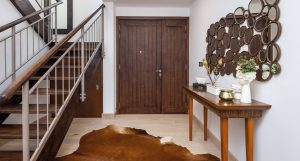
Saheel Villa Arabian Ranches Oak Estoril flooring paired with a textured carpet shaping the entry space.
Intentional Integration of Carpet and Wood Flooring
Blending carpet and wood flooring is not a trend. It reflects the reality that different spaces within a home have different demands, and no single material meets all of them equally well.
The most successful interiors resolve this early. Each material is placed with clarity, with a defined role, and with a clear understanding of how the two will meet. That level of consideration is what separates a floor that works from a space that feels complete.
Key Takeaways
A well-resolved interior comes from understanding how different materials work together, not simply combining them.
- Carpet and wood flooring serve distinct roles, with wood providing structure and continuity, and carpet introducing softness, acoustic control, and comfort.
- Their effectiveness depends on placement, using each material to define zones without interrupting the overall flow of the space.
- Cohesion is achieved through disciplined design decisions, particularly in colour alignment, proportion, and clean transitions between materials.

Warm Regards,
Pauline Madani
Founder & Managing Director Nordic Homeworx
Frequently Asked Questions
Can carpet and wood flooring be installed at the same time?
▼Yes, but the sequence matters. Wood flooring is typically installed first, followed by carpet and underlay. This ensures cleaner transitions and allows both materials to meet at the correct finished height.
What is the best way to transition between the two surfaces?
▼A flush transition between carpet and wood flooring at the same finished height is the most effective approach. This usually requires planning during the specification stage, including underlay thickness and subfloor preparation.
What carpet colour works best with wood flooring?
▼Carpet colour should sit within the same tonal family as the wood flooring. Warm wood tones pair well with creams, taupes, and earth tones, while cooler floors are better matched with soft greys and neutral shades.
Which option makes a room feel larger?
▼Wood flooring typically makes a room feel larger due to its continuous surface and light reflection. However, a well-proportioned carpet can define space without reducing that sense of openness.
Can carpet and timber floors be replaced independently?
▼Yes, in most cases they can. As long as transitions are properly detailed, either material can be replaced without affecting the other, which supports long-term flexibility in the home. For timber floors in particular, replacement or refinishing is best assessed with professional input to ensure the existing structure and finish are handled correctly.