


Why Choose Oak Wood Flooring? Benefits and Maintenance
June 22, 2026
Key Takeaways
- Oak remains widely specified because it combines practicality, versatility, and long-term value in a way few alternatives can match.
- Visual appearance varies significantly between grades, making selection just as important as colour or finish.
- Engineered construction is often preferred in modern homes due to its suitability for underfloor heating and changing indoor conditions.
- Surface treatments affect both appearance and how the timber develops over time, making product specification an important part of the decision-making process.
The floor is often the largest continuous element within a home. It anchors furniture, shapes how people move through a room, and shapes the overall atmosphere more than many features that receive far greater attention. Few materials have remained relevant across as many decades, interior styles, and construction contexts as oak. The enduring success of oak wood flooring is not simply a matter of popularity, but of performance, reliability, and lasting appeal.
Its value does not come from a single quality. It comes from a balance of qualities that few other flooring materials achieve simultaneously.
What Makes Oak Wood Flooring the Industry Standard?
Most flooring materials excel in one particular area. Some prioritise hardness. Others are chosen for visual impact or exceptional stability. Oak is not the outright leader in any single category, and that is precisely why it remains so widely specified.
Its strength lies in versatility. It is durable enough for everyday living, responsive enough to accommodate a wide range of finishing techniques, and visually distinctive without dominating an interior. That combination allows it to work across different design styles, construction methods, and project requirements.
Manufacturers frequently use oak as a reference species when developing new finishes and flooring systems because its tannin content, grain structure, and density respond predictably to oils, stains, smoked treatments, and modern lacquers.
Professionals return to oak not out of habit, but because it continues to deliver dependable outcomes across a broad range of applications where other timbers may introduce greater uncertainty.
In this Collection Villa living area, Oak Berlin flooring adds understated depth beneath contemporary furnishings.
What Makes Oak Wood Flooring Different?
The qualities that distinguish oak are not always immediately visible. Some shape its visual expression, while others determine how it responds to finishing treatments and long-term use.
Grain Structure and Visual Expression
Few timber species combine definition and restraint as successfully. Oak displays a recognisable grain pattern that adds texture and movement without dominating the wider interior scheme. This allows it to work comfortably across a broad range of aesthetics, from contemporary spaces to more traditional settings.
This quality becomes particularly valuable in interiors where material selection is intended to support the overall composition rather than become its focal point. The patterning introduces subtle tonal variation while maintaining the sense of continuity that many homeowners and designers seek.
Natural Composition and Finishing Compatibility
Beyond its appearance, oak possesses an inherent chemistry that makes it exceptionally responsive to finishing treatments. Its high tannin content allows oils, stains, and reactive processes to interact with the timber itself rather than simply forming a decorative layer above it.
This characteristic is particularly evident in smoked and fumed finishes. Rather than relying solely on pigment, these treatments alter colour through a reaction with naturally occurring tannins, producing richer tones while preserving the underlying grain.
The result is a species that accommodates a wider range of finishes than many alternatives while retaining an authentic look as it matures. Its versatility is shaped as much by its composition as by its aesthetic qualities.
The dining space features Oak Tramonto flooring, balancing darker timber tones with lighter finishes.
The Benefits of Oak Wood Flooring
Many of the qualities that make oak widely specified translate directly into practical advantages once it becomes part of a home.
Durability for Everyday Living
Few households remain static for long. Furniture is moved, children play, pets run through rooms, and daily routines place constant demands on the surfaces beneath them. Oak strikes a practical balance between strength and usability, allowing it to accommodate everyday activity without requiring excessive caution or specialised care.
Design Flexibility
Interior styles evolve over time, but oak rarely feels tied to a particular trend. It works comfortably within modern homes, period properties, Scandinavian-inspired schemes, and spaces that combine traditional architecture with modern furnishings. That adaptability makes it easier to update the wider interior without feeling constrained by the flooring already in place.
Long Service Life
One of oak’s most valuable qualities is its ability to be renewed rather than replaced. Depending on construction and wear layer thickness, many installations can be sanded and refinished multiple times, allowing finishes and colour treatments to evolve alongside changing preferences. Over the long term, that restoration potential can extend usability considerably compared with surfaces that require full replacement once wear becomes apparent.
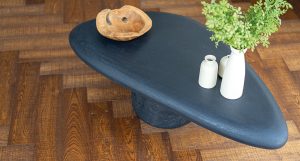
Smoked oak flooring reveals pronounced grain detail and tonal variation throughout this Alvorada Villa.
Why Oak Flooring Grades Matter
Two oak floors can share the same species, finish, and construction yet create entirely different impressions. Grading determines how much of the tree’s organic variation remains visible, making it one of the most influential decisions in the selection process.
Select Grade
Select grade features minimal knots, consistent colouring, and a cleaner overall appearance. It suits clean-lined interiors, minimalist schemes, and Scandinavian-inspired spaces where restraint and continuity are important design objectives.
Natural Grade
Natural grade introduces greater tonal diversity while retaining overall cohesion. Small knots, subtle tonal shifts, and increased patterning create a more organic feel without becoming visually dominant. It remains one of the most versatile options for residential interiors.
Rustic Grade
Rustic grade embraces the individuality of the tree. Larger knots, stronger colour contrast, and more pronounced markings create a richer and more textural appearance. It works particularly well in character-led interiors where authenticity and material expression are central to the overall scheme.
The choice influences the overall impression as much as colour or surface treatment. For that reason, grading should be considered early in the decision-making process rather than treated as a secondary detail.
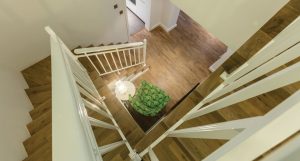
In this Springs Townhouse, Oak Stone flooring extends seamlessly across stairs and upper levels.
Surface Treatments and Texture
Grade influences the organic variation that remains visible, but finishing techniques shape how that character is ultimately experienced in everyday use.
Brushed Oak
Brushing removes the softer early-growth fibres from the top layer, leaving the denser grain structure more pronounced. This creates a more tactile feel underfoot and introduces subtle texture that helps disguise minor marks acquired through daily use.
Smoked Oak
Smoking darkens timber through a reaction with naturally occurring tannins rather than relying solely on pigment. The process produces deeper, more nuanced tones while preserving the underlying patterning, resulting in a finish that tends to mature naturally over time.
Ultra-Matt Finishes
Advances in lacquer technology have made it possible to protect timber without introducing the reflective appearance associated with older coatings. Ultra-matt finishes preserve a more authentic look, allowing texture and tonal variation to remain the focus. Homeowners comparing different approaches may also find it useful to understand the different finishing options available and how they influence long-term appearance and maintenance.
Bevel Profiles
A bevel is a subtle chamfer along the edge of a board. Two-sided bevels create gentler definition along the length, while four-sided profiles emphasise each plank individually. The choice affects how the installation is perceived across a room, with deeper bevels creating a more traditional feel and minimal detailing producing a cleaner, more continuous appearance.
The final result is shaped by more than species and colour alone. Texture, finish, and edge detailing all contribute to how a floor is experienced once installed.
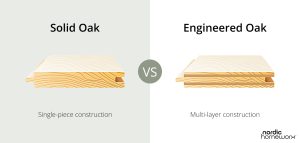
Solid Oak vs Engineered Oak Flooring
The choice between solid and engineered oak is less about appearance and more about how the material will behave once installed. Both use genuine oak as the visible layer, but their construction influences stability, installation flexibility, and suitability for different environments.
| Factor | Solid Oak | Engineered Oak |
| Construction | Single piece | Multi-layer construction |
| Stability | More movement | Greater dimensional stability |
| Underfloor Heating | Limited suitability | Often preferred |
| Wide Plank Formats | More restricted | Greater flexibility |
| Refinishing Potential | Excellent | Depends on wear layer |
The differences become most apparent when site conditions are less predictable. Wider plank formats, underfloor heating systems, and heavily conditioned interiors place greater demands on timber construction. In these situations, engineered products are often preferred because they provide greater flexibility without altering the finished result.
How Oak Flooring Ages Over Time
Like all timber, oak continues to evolve after installation. Exposure to daylight gradually warms its tone, particularly in lighter selections and natural finishes. Areas covered by rugs or furniture may change at a different rate, creating subtle tonal variation if layouts are altered over time.
Modern finishing systems help slow this process. UV-cured lacquers, white oils, and pigmented treatments can preserve lighter tones for longer, helping maintain colour stability without preventing natural ageing entirely.
This gradual change is not a flaw. It is part of how oak matures throughout its lifespan.
Caring for Oak Wood Flooring
Good maintenance is less about intensive treatments and more about consistent habits. Small preventative measures often have the greatest effect on long-term condition.
Everyday Care
Regular dust removal helps prevent fine particles from dulling the finish over time. Dry cleaning methods are generally preferable, while any liquid products should be specifically formulated for timber surfaces. Homeowners seeking more detailed guidance on floor cleaning and maintenance should always follow manufacturer recommendations. Standing water should always be removed promptly.
Preventing Premature Wear
Furniture pads, entrance matting, and sensible moisture management all help minimise unnecessary wear. In households with pets, keeping claws trimmed can also reduce surface scratching in frequently used areas.
When Refinishing Becomes Necessary
Loss of finish protection, visible wear, or a desire to update the look are the most common reasons for refinishing. The number of times this can be done depends on the construction and wear layer thickness of the product selected.
Consistent care is usually more effective than corrective work undertaken after problems have already developed.
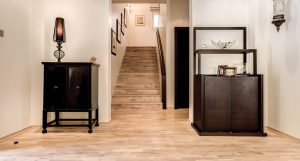
Oak Dew flooring extends from the entrance hall to the staircase within this Hattan Villa.
Is Oak Right for Every Home?
Oak suits a wide range of residential settings, but suitability depends as much on the environment and homeowner expectations as it does on the material itself.
Spaces exposed to persistent moisture, such as bathrooms or areas with unresolved damp issues, are often better served by alternatives designed specifically for those conditions. Even engineered products have practical limits.
Lifestyle considerations matter too. Timber rewards consistent care and will not deliver the same ownership experience as fully synthetic surfaces designed to require minimal attention.
Budget should be viewed in terms of the complete project rather than the boards alone. Installation, subfloor preparation, and long-term upkeep all contribute to the overall investment.
For households whose priorities align with what oak offers, few options provide the same combination of versatility, aesthetic appeal, and dependable performance.
Why Homeowners Continue to Choose Oak Wood Flooring
Few materials remain relevant for generations without offering something genuinely useful. Oak has endured not because it follows changing trends, but because it continues to perform across changing design trends and household requirements without losing the characteristics that define it.
The most successful outcomes come from matching the right specification to the conditions of the project. When those decisions are made thoughtfully, oak becomes more than a finish beneath your feet. It becomes an enduring part of how a home looks, feels, and evolves over time.

Warm Regards,
Pauline Madani
Founder & Managing Director Nordic Homeworx
Frequently Asked Questions
Does Oak Flooring Increase Property Value?
▼While no flooring material guarantees a higher selling price, oak is widely regarded as a desirable feature in residential properties. Buyers often associate natural timber with longevity, quality, and the ability to be refinished rather than replaced. The impact ultimately depends on location, condition, and the overall standard of the property.
Can It Be Installed in Kitchens?
▼Yes, provided moisture is managed appropriately. Kitchens do not present the same level of exposure as bathrooms, and many homeowners successfully use oak in these spaces for decades. Promptly cleaning spills and maintaining stable indoor conditions are the most important considerations.
Can I Use Rugs with Rubber or Latex Backings?
▼It is generally best to avoid rugs with rubber, latex, or plastic backings. These materials can trap moisture beneath them and, in some cases, react with the floor finish, causing discolouration or residue over time. Natural fibre rugs and breathable underlays are usually the safer option.
Is It Safe to Use a Steam Mop?
▼No. Steam mops introduce heat and moisture that can penetrate joints and affect both the finish and the timber beneath. Over time, this may contribute to movement, surface damage, or premature wear. Dry cleaning methods and lightly damp microfibre mops remain the safest approach.
Why Do Some Timber Floors Look More Expensive Than Others?
▼The difference often comes down to specification rather than species alone. Grade selection, plank dimensions, surface treatment, edge detailing, and installation quality all influence the final result. Two products made from the same timber can create very different impressions once installed.