



What is the Best Underlay for Wood and LVT Flooring?
June 8, 2026

Key Takeaways
- Underlay influences far more than cushioning, affecting how a surface sounds, feels, and performs throughout its lifespan.
- The correct choice depends on the material being installed. Wood and LVT place different demands on the layers beneath them, making compatibility essential.
- Thickness alone is not an indicator of quality. The most effective solutions are chosen according to the installation method, site conditions, and intended use of the space.
- Many common issues can be traced back to decisions made before work begins, which is why this part of the assembly should be considered with the same care as the visible finish itself.
Most homeowners spend considerable time choosing a floor. The colour, the finish, the texture underfoot. What receives far less attention is the layer that determines how that flooring actually performs. Underlay is rarely visible after completion, yet it affects everything from the sound of footsteps to everyday comfort and long-term durability. Getting it right matters more than many people realise.
What Does Underlay Do?
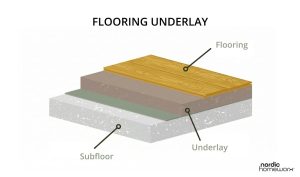
Positioned between the finished surface and the subfloor, underlay creates a buffer that influences how the floor assembly behaves over time. Its role extends beyond comfort. It affects acoustics, helps distribute load more evenly, and contributes to the overall feel underfoot.
One of its less obvious functions is sound control. Without it, floating installations can develop a hollow, echoing quality with every step. A well-specified product absorbs some of that vibration before it travels, creating a quieter and more grounded feel throughout the space.
It also helps manage minor irregularities beneath the surface. Small variations in flatness can create pressure points that concentrate weight in specific areas. It spreads that load more evenly, reducing localised stress. This is not the same as subfloor preparation, however, and should never be treated as a substitute for it. Preparation remains a separate step.
How Underlay Influences Long-Term Results
The impact of underlay is often felt long before it is seen. Even a well-made floor can lose its sense of solidity if the layers beneath it have been poorly matched to the finish above. That soft, slightly unstable sensation underfoot is rarely a fault in the visible finish itself. More often, it reflects a specification decision made before the project began.
The consequences are not always immediate. In click-system floors, every step places small but repeated stresses on the locking system connecting the boards. When the supporting layer is unsuitable, those stresses increase over time. Months later, the result may appear as gaps, movement, or joints that no longer feel secure.
Because these issues develop gradually, they are often mistaken for product defects. In reality, long-term outcomes depend as much on what sits under the finished surface as the material visible above it.

Custom chevron oak flooring and quality underlay enhancing comfort throughout this One Za’abeel Duplex.
Can Wood and LVT Flooring Use the Same Underlay?
They do not. Although both may be installed as floating systems, their construction and performance requirements differ significantly. A product that works well under timber may be entirely unsuitable for LVT. Matching the supporting layer to the flooring type is one of the most important decisions made before work begins.
Wood Flooring
Natural timber responds continuously to its surroundings, which is one reason wood underlay plays an important supporting role under engineered boards. Rather than acting as a cushion, it helps create a more controlled interface between the floor and the subfloor, contributing to comfort, sound reduction, and everyday usability.
For floating wood floors, underlay in the 2 to 3mm range is commonly specified, though manufacturer recommendations should always take precedence. The objective is not maximum thickness, but an appropriate balance between support, acoustic control, and long-term reliability.
LVT Flooring
Luxury vinyl tile places different demands on the layers under it. Its locking mechanisms are smaller and more precise, leaving far less tolerance for compression under load. As a result, dense products are generally preferred, while excessive cushioning can place unnecessary strain on the joints over time.
Many LVT flooring systems require thinner specifications than those used beneath timber installations. Because the material itself is relatively thin, the quality and flatness of the substrate become particularly important. Any imperfection below is more likely to telegraph through to the material above.

Premium underlay supporting Oak Estoril flooring throughout this thoughtfully designed Dubai Creek Harbour apartment.
Types of Underlay and Their Best Applications
No single solution is suitable for every project. The right choice depends on the flooring type, the practical requirements of the space, and the conditions beneath it. Some options prioritise sound control, while others are designed for durability, moisture protection, or compatibility with specific installation methods.
Foam
Often selected for straightforward residential projects, foam provides a practical balance of comfort, sound reduction, and affordability. Its lightweight construction and ease of installation make it a common choice under floating floors where demands are relatively modest and budget remains an important consideration.
Rubber
Where impact noise is a primary concern, rubber is often the preferred option. Its density helps absorb the vibrations created by footsteps, making it particularly effective in apartments and multi-level homes. It also maintains its effectiveness under sustained use, which can be beneficial in busy households and high-traffic areas.
Cork
The natural cellular structure of cork allows it to compress and recover repeatedly without losing effectiveness. This makes it well suited to areas where long-term consistency matters. In addition to providing acoustic and thermal benefits, it appeals to homeowners who place value on renewable and responsibly sourced materials.
Integrated Moisture-Barrier Systems
Some products combine multiple functions within a single layer, incorporating both acoustic properties and moisture protection. These systems are commonly specified over concrete substrates, where vapour management is an important consideration. By integrating both functions into one product, they can simplify installation while reducing the number of separate layers required.
How Thick Should Underlay Be?
Thickness is one of the most misunderstood aspects of specification. It is easy to assume that more material will automatically improve comfort or performance, but that is rarely the case. As a general guide:
| Flooring Type | Typical Underlay Thickness |
| LVT | 1 to 1.5mm |
| Laminate | 2 to 3mm |
| Engineered Wood | 2 to 5mm |
| Acoustic Applications | 5mm+ (where compatible) |
These figures should always be treated as guidelines rather than universal rules, as manufacturer requirements take precedence.
Excessive thickness can result in what is often described as a trampoline effect. Instead of feeling solid underfoot, the surface develops a subtle bounce that can affect the overall feel of the floor. The objective is not to maximise thickness, but to select an option appropriate for the flooring system above.
Build-up height also deserves consideration. The combined depth of the substrate, underlay, and finished material determines the final floor level. In open-plan layouts or renovation projects where different materials meet, an unsuitable build-up can lead to awkward transitions that are difficult to correct once the work is complete.

Oak Sky flooring and quality underlay creating a quieter atmosphere throughout this Vida Emirates Hills apartment.
Choosing Underlay for Underfloor Heating
When underfloor heating is part of the specification, thermal performance becomes one of the most important selection criteria. The layer below must allow warmth to move efficiently into the room rather than slowing its passage through the construction.
Materials with high thermal resistance can reduce efficiency by restricting the transfer of warmth. For this reason, products intended for heated floors are designed with low thermal resistance, helping the heating system respond more effectively while maintaining a consistent indoor environment. Compatibility should always be verified with both the flooring manufacturer and supplier before work begins.
Assessing the Conditions Before You Choose
No single solution is right for every project. The most effective choice is determined by the conditions below it and the demands placed upon it once in use.
Start with the Installation Method
Installation method should always be considered first. Floating systems typically require a supporting layer, while bonded floors often have different requirements or may not require one at all. Manufacturer guidance should take precedence over general assumptions.
Understand the Subfloor Conditions
The substrate influences both product selection and long-term performance. Concrete and timber surfaces present different challenges, while variations in flatness can affect how the finished floor performs. No product should be expected to compensate for deficiencies that should have been addressed during preparation.

Oak flooring and underlay helping create a welcoming atmosphere within this contemporary Palm Jumeirah apartment.
When Is a Damp Proof Membrane Necessary?
Concrete can continue releasing moisture long after construction is complete. Without adequate protection, dampness may become trapped beneath the visible finish, increasing the risk of warping, instability, or adhesive failure in bonded floors.
Some combination products include an integrated barrier, but moisture testing should always be carried out before work begins. Testing determines whether additional safeguards are necessary rather than relying on assumptions about the substrate.
Match the Specification to the Space
Different environments place different demands on the construction under the finished surface. In some spaces, sound control may be the priority. In others, compatibility with underfloor heating or resistance to sustained loading may carry greater importance. The most successful outcomes reflect how the space will be used rather than relying on a one-size-fits-all approach.
Common Underlay Mistakes to Avoid
Most planning-related problems are not caused by defective materials. They usually originate much earlier, during product selection and project preparation. The consequences may not become visible immediately, which is why these decisions are often underestimated during renovation projects.
- Selecting a product based solely on thickness rather than suitability for the flooring system.
- Assuming the same solution will perform equally well across different materials.
- Overlooking moisture conditions before installation begins.
- Expecting a support layer to compensate for deficiencies in the substrate.
- Prioritising habit or past experience over manufacturer guidance.
These issues rarely reveal themselves straight away. More often, they emerge gradually through unwanted noise, movement, uneven transitions, or premature wear. By that point, the supporting layer is hidden from view, making the original cause difficult to identify.

White-oiled oak flooring installed over quality underlay, enhancing everyday practicality throughout this Palm residence.
The Best Underlay Supports the Floor Above It
The structure beneath is rarely the most visible part of a flooring project, yet its influence extends far beyond what can be seen once the work is complete. It contributes to how the finished floor sounds, feels, and performs throughout years of daily use.
The most successful specifications are not driven by a single feature or product category. They are shaped by a clear understanding of the material being installed and the environment in which it will be used. When those elements are aligned, the supporting layers disappear from view, but their contribution remains evident every time the space is used.

Warm Regards,
Pauline Madani
Founder & Managing Director Nordic Homeworx
Frequently Asked Questions
Can I use two layers of thin underlay to create a thicker one?
▼No. Stacking multiple layers introduces excessive movement beneath the flooring, reducing stability and increasing stress on locking systems. If additional acoustic performance or cushioning is required, it is better to choose an underlay designed to achieve that outcome rather than combining separate layers.
If my LVT already has a built-in backing, do I need anything underneath it?
▼In most cases, no. Many modern LVT products include an integrated backing designed to provide acoustic support and improve comfort underfoot. Adding an additional underlay beneath these products can create excessive flex, placing unnecessary strain on the locking system. Manufacturer guidance should always be followed.
How do I know if my existing underlay can be reused when replacing an old floor?
▼Reusing an existing underlay is rarely recommended. Over time, materials compress, lose resilience, and experience wear that may not be visible on the surface. Installing new flooring over an aged product can compromise support, acoustic performance, and overall longevity.
Can it help reduce noise between floors?
▼Yes, although results depend on the material selected and the type of noise being addressed. Some underlay products are specifically designed to reduce impact noise from footsteps and moving furniture, making them particularly useful in multi-level homes and apartment environments.
Does Every Room Need the Same Solution Beneath the Floor?
▼Not necessarily. Different spaces often have different priorities. Sound control may be more important in apartments or upper floors, while moisture protection can become a greater consideration over concrete substrates. The most appropriate underlay depends on how the space will be used and the conditions beneath it.