


Top 15 Eco-Friendly Flooring Options to Consider in 2026
April 13, 2026
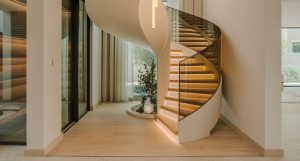
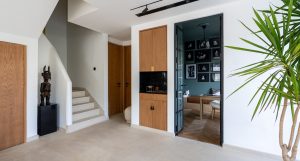
Limetree Valley villa with Oak Nouveau Blonde, where eco-friendly flooring complements the staircase and natural material palette.
Eco-friendly flooring is defined not only by what a material is made from, but by how it is sourced, manufactured, installed, and how long it performs before replacement.
A floor that uses sustainable materials but fails within a short period carries a higher environmental cost over time. Longevity, stability, and responsible production all contribute to what makes a flooring option genuinely sustainable.
The options below reflect a range of materials that meet these criteria in different ways. Each one offers a distinct balance of environmental performance, durability, and design suitability.
15 Best Eco-Friendly Flooring Options for Your Home
Each of these eco-friendly flooring options reflects a different balance of material efficiency, performance, and long-term use.
1. Engineered Hardwood Flooring
Constructed with a real wood veneer over a layered plywood or HDF core, this material uses timber more efficiently than solid wood, as only the surface layer requires premium cuts. This makes engineered hardwood flooring a more considered use of natural resources. It also allows for a wider use of timber species without placing the same level of demand on raw material supply.
The layered construction improves dimensional stability, reducing movement and gapping in environments with fluctuating humidity. This contributes to a more consistent surface over time, particularly in larger, open-plan spaces where continuity is more noticeable.
Best for: villas, open-plan living areas, and spaces where the natural warmth of wood is a priority.
Key consideration: The thickness of the veneer and the quality of the finish determine how well the floor ages and whether it can be refinished.
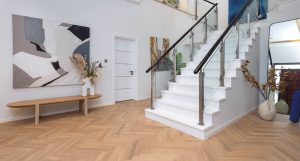
Sanctuary Falls Villa in Jumeirah Golf Estates, Dubai, showcases the best eco-friendly flooring by Nordic Homeworx.
2. Reclaimed Wood Flooring
Sourced from existing structures such as warehouses and industrial buildings, this material avoids the need for new timber extraction. This makes reclaimed wood flooring a direct form of material reuse.
Each board carries visible signs of its previous life. Grain variation, markings, and natural ageing create a level of character that new materials cannot replicate.
Best for: character-led interiors, heritage renovations, and spaces where individuality is a priority.
Key consideration: Supply can be inconsistent. Larger projects require careful planning to ensure material continuity.
3. Eco-Friendly Vinyl Flooring (Low-VOC LVT)
This material is not natural or biodegradable. Its sustainability comes from improved formulation, including reduced VOC emissions, the use of recycled content in some products, and a long performance lifespan that limits replacement. In this context, eco-friendly vinyl flooring represents a more responsible evolution of conventional vinyl.
Modern low-VOC LVT contributes less to indoor air quality impact and performs reliably in high-traffic and moisture-prone environments where natural materials may struggle.
Best for: kitchens, bathrooms, commercial spaces, and high-traffic areas where moisture resistance is essential.
Key consideration: Quality varies. Look for verified low-VOC certification and products with meaningful recycled content.
4. Cork Flooring
Harvested from the bark of the cork oak tree, this material regenerates naturally without requiring the tree to be cut down. The bark renews over time, allowing repeated harvesting without damaging the tree. This makes cork flooring one of the few genuinely renewable options available.
The surface is warm underfoot, provides acoustic cushioning, and contains suberin, a natural compound that resists mould, mildew, and insects without chemical treatment.
Best for: bedrooms, home offices, and living areas where comfort underfoot and acoustic performance matter.
Key consideration: Cork requires sealing to protect against moisture and surface abrasion. Without proper maintenance, the surface can compress and lose its resilience over time.
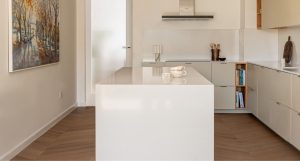
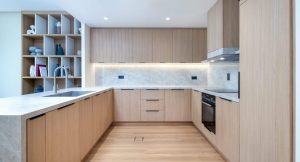
Ghadeer Villa in The Lakes, Dubai, showcases a modern kitchen with high-quality LVT eco flooring from Nordic Homeworx.
5. Bamboo Flooring
Growing to maturity within three to five years, this material regenerates far faster than Growing to maturity within three to five years, this material regenerates far faster than conventional timber species. This rapid renewal makes bamboo flooring a resource-efficient alternative when sourced and processed responsibly. When manufactured to a high standard, it is also hard and stable.
Quality varies across this category. Differences in processing methods and adhesive systems affect both performance and indoor air quality. Some products use formaldehyde-based adhesives, which can undermine the environmental case.
Best for: contemporary interiors with a clean, linear aesthetic.
Key consideration: Source from manufacturers with verified low-formaldehyde adhesive systems and independent environmental certification.
6. Natural Linoleum Flooring
Often confused with vinyl, this material is entirely different in composition and performance. Made from natural ingredients such as linseed oil, cork dust, wood flour, jute, and pigments, it is pressed onto a durable backing. This makes natural linoleum flooring biodegradable, naturally antibacterial, and long established as a reliable flooring option.
Recent improvements in colour range and surface finishing have expanded its suitability beyond purely functional spaces. It now performs well in both contemporary interiors and high-use areas.
Best for: kitchens, utility areas, and spaces requiring a durable, fully natural surface.
Key consideration: Periodic sealing is required to maintain the surface and protect against moisture at joints and edges.
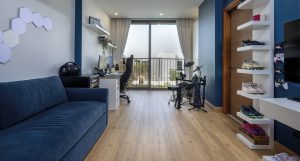
Downtown Residences Apartment in Dubai, showcases a Japandi-style interior with eco flooring from Nordic Homeworx.
7. Recycled Glass Tile Flooring
Produced from post-consumer and post-industrial glass, this material diverts waste from landfill and repurposes it into a durable surface. Sources include bottles, windows, and architectural glass processed into tile form. This makes recycled glass tile flooring both resource-efficient and visually distinctive.
Glass tiles interact with light in a way few materials can, creating depth and variation across changing conditions.
Best for: feature areas, bathrooms, and spaces where visual impact is the priority.
Key consideration: Requires a stable, level substrate and precise installation. The surface is harder underfoot and less tolerant of structural movement.
8. Sustainable Carpet Flooring (Natural Fibres)
Made from materials such as wool, sisal, jute, and seagrass, this type of carpet differs significantly from synthetic alternatives. These fibres are renewable, biodegradable at end of life, and support indoor air quality by trapping dust and particulates. This gives sustainable carpet flooring a more balanced environmental profile.
Wool stands out for its natural thermal and acoustic performance, along with durability when properly maintained.
Best for: bedrooms, living areas, and spaces where acoustic comfort and warmth underfoot are priorities.
Key consideration: Requires more maintenance than synthetic carpet and may be less suitable for high-traffic areas or homes with pets.
Sidra Villa in Dubai Hills Estate, showcases a classic living area with high-quality LVT eco flooring.
9. Concrete Flooring
In new construction, this often refers to the structural slab itself, finished rather than covered. Using the existing surface avoids the need for additional flooring materials. This gives concrete flooring a strong environmental position, particularly in renovation projects.
It also performs well thermally, absorbing heat during the day and releasing it gradually, which supports passive temperature regulation.
Best for: contemporary and industrial interiors, spaces with underfloor heating, and renovations where the existing slab is in good condition.
Key consideration: The surface is hard underfoot. Comfort in living areas often requires rugs or considered furnishing.
10. Terrazzo Flooring
Composed of marble, granite, glass, or other aggregates set in a cement or resin base, this material is ground and polished to a smooth surface. It originated as a way to reuse stone offcuts, making it an early example of resource-efficient construction. This gives terrazzo flooring a long-standing link to material reuse.
Modern terrazzo can incorporate recycled content and is known for its durability. Well-maintained installations can remain in use for decades, resulting in a low lifecycle impact.
Best for: commercial spaces, entrance halls, bathrooms, and areas where long-term durability and low maintenance are priorities.
Key consideration: Requires professional installation and finishing, making it more involved than most flooring options.
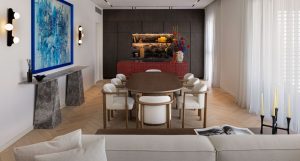
Oak Herringbone AB Crème White flooring in Nikki Beach Residences, reflecting a natural material choice with long-term durability.
11. Hempcrete Flooring
Formed from hemp hurds and a lime binder, this material is used in low-impact construction systems. Hemp grows quickly, requires minimal pesticides, and absorbs carbon during its growth cycle. This gives hempcrete flooring strong environmental credentials alongside useful thermal and acoustic properties.
It remains a niche option. Availability is limited, and both specification and installation require specialist knowledge.
Best for: environmentally driven new-build projects where reducing impact is the primary goal.
Key consideration: Treat as an emerging material. Work with contractors who have direct experience with hempcrete systems.
12. Wool Carpet Flooring
Derived from a renewable fibre, this material is biodegradable at end of life and naturally resistant to flame without chemical treatment. It also retains resilience under sustained foot traffic, allowing it to perform consistently over time. This gives wool carpet flooring a strong sustainability profile when maintained properly.
It also contributes to indoor air quality. The fibres absorb and hold VOCs, humidity, and particulates within the room environment.
Best for: bedrooms, studies, and formal living areas where acoustic warmth and a natural feel are priorities.
Key consideration: Represents a higher upfront investment, but its longevity supports strong lifecycle value.
13. Clay Tile Flooring
Used for centuries, this material is formed from natural clay and fired at high temperatures to create a hard, durable surface. The process involves relatively low chemical treatment compared to many modern flooring materials. This gives clay tile flooring a straightforward environmental profile supported by material simplicity and longevity.
The surface performs reliably in demanding conditions and is well suited to spaces where durability and ease of cleaning are essential.
Best for: kitchens, utility areas, covered outdoor spaces, and applications requiring a robust, easy-to-clean surface.
Key consideration: Unglazed tiles require sealing to resist moisture and staining. The firing process is energy-intensive, so sourcing from efficient manufacturers improves the overall environmental case.
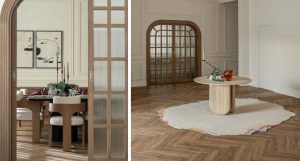
Redwood Herringbone LVT flooring in a Mushrif villa, reflecting an eco-friendly choice through durability and long-term performance.
14. Recycled Plastic Composite Flooring
Produced from post-consumer plastic waste, this material repurposes packaging and industrial by-products into a durable surface. It extends the useful life of plastic that would otherwise enter landfill or incineration. This gives recycled plastic composite flooring a clear role in waste reduction.
The material performs reliably in moisture-prone environments and remains stable across temperature and humidity changes.
Best for: outdoor areas, covered terraces, utility spaces, and applications where moisture resistance is the priority.
Key consideration: Verify the proportion of recycled content. The environmental benefit is stronger when post-consumer material forms the majority of the product.
15. Recycled Rubber Flooring
Produced from reclaimed vehicle tyres, this material repurposes a difficult waste stream into a durable surface. Tyres are processed and reformed into flooring that withstands demanding use. This gives recycled rubber flooring a clear role in waste diversion.
The surface is impact-absorbent, acoustically effective, and slip-resistant, making it suitable for high-use environments.
Best for: gyms, playrooms, commercial kitchens, and spaces where safety, acoustic performance, and durability under heavy use are priorities.
Key consideration: Off-gassing can be noticeable, particularly in enclosed spaces. Adequate ventilation during and after installation is advisable.
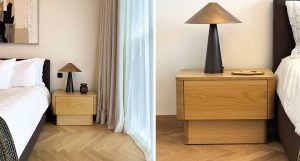
Studio Oak AB White herringbone flooring in an Emaar Beachfront apartment, combining natural wood with an eco-conscious material choice.
How to Choose the Right Eco-Friendly Flooring for Your Home
The options above vary in material, performance, and design. Choosing the right one depends on how the space is used and what it requires over time.
Room Function and Suitability
Start with how the space functions. Kitchens and bedrooms place different demands on a floor, and not all materials perform equally across both.
Moisture-prone areas such as kitchens, bathrooms, and utility spaces require surfaces that can tolerate humidity and regular cleaning. Low-VOC LVT, natural linoleum, clay tile, and recycled rubber perform reliably in these conditions. Engineered hardwood and cork can be used with the right finishing but require more maintenance.
In dry living spaces, the range broadens. Comfort underfoot and acoustic performance become more relevant, making materials such as wool carpet, cork, and engineered hardwood more suitable.
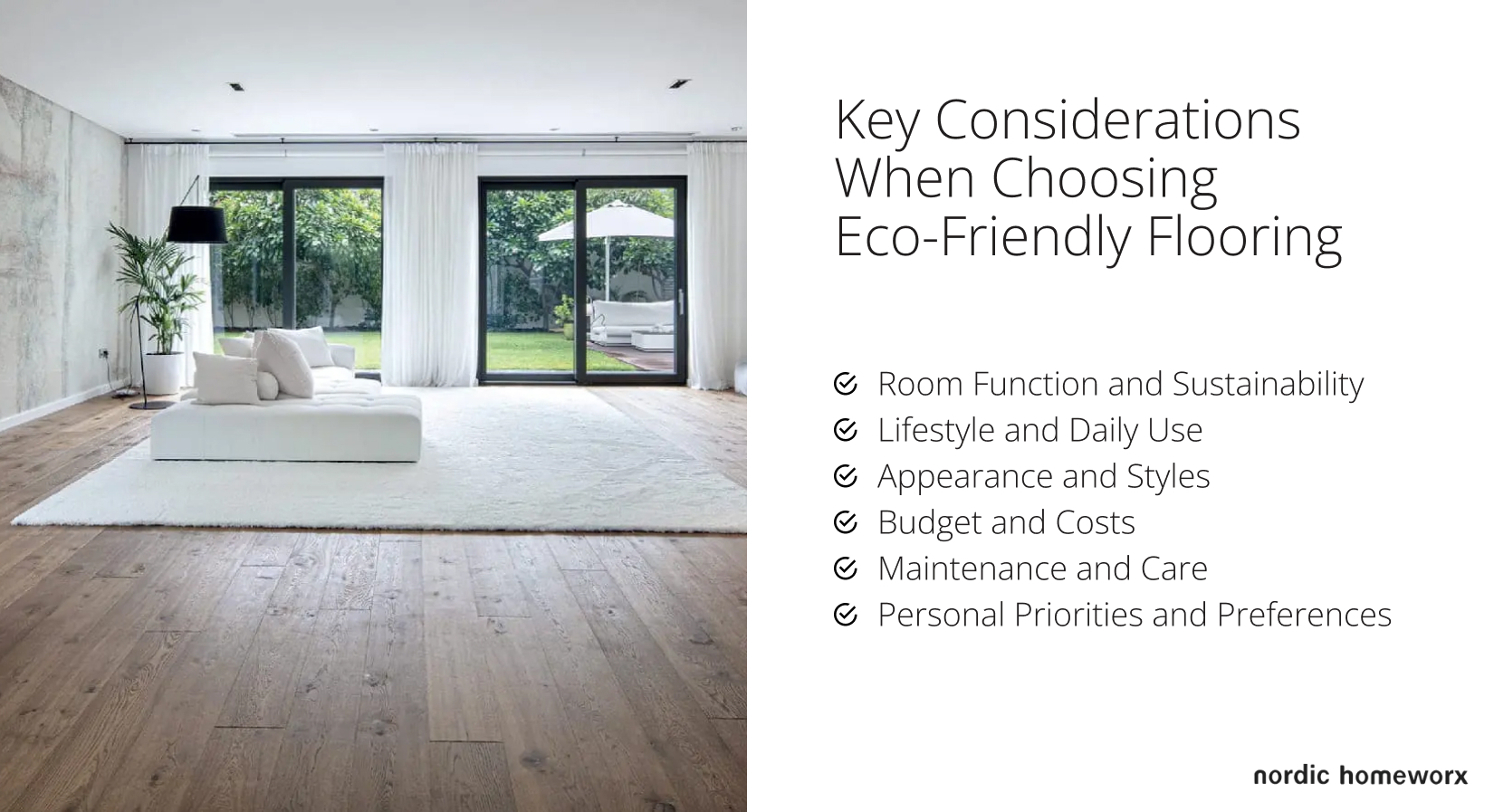
Lifestyle and Daily Use
Consider how the space is actually used. Homes with children, pets, or high foot traffic place different demands on a floor than quieter environments.
Harder surfaces such as terrazzo, recycled glass tile, and concrete resist abrasion and impact. Softer materials like cork and natural carpet provide comfort but may show wear over time. Engineered hardwood sits between the two, offering natural warmth with durability suited to residential use.
Appearance and Design Integration
The floor is the largest continuous surface in a room and sets the visual foundation. Its colour, texture, and layout should be considered alongside wall finishes, furniture, ceiling height, and natural light.
Lighter tones open a space and work well in lower-light conditions. Darker finishes add depth but require sufficient light to avoid feeling heavy. Textured surfaces such as cork or brushed wood add interest without pattern, while smoother finishes like terrazzo or glass tile reflect light and introduce movement.
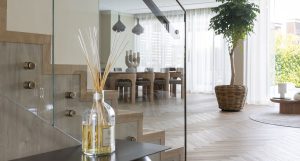
Taiga Herringbone LVT flooring in a Dubai Hills villa, offering an eco-friendly option with durable, long-lasting performance.
Budget and Long-Term Value
A flooring decision is best assessed in terms of lifecycle value rather than upfront cost. Materials that perform consistently over time often prove more economical than those that require earlier replacement.
Longevity reduces both financial cost and the environmental impact associated with replacement.
Maintenance and Longevity
Every flooring material requires maintenance. The key consideration is whether that maintenance aligns with how the space is used.
Engineered hardwood can be cleaned and refinished, extending its lifespan. Cork and natural linoleum require periodic resealing. Concrete and terrazzo need minimal maintenance once properly finished.
Well-maintained floors last longer, and longevity remains a reliable indicator of sustainability.
Personal Priorities and Preferences
After the practical and technical considerations, the decision often comes down to what matters most in daily use. For some, environmental impact is the primary driver. For others, comfort, acoustic quality, and natural appearance take precedence.
Both approaches are valid. The key is understanding the trade-offs and making a decision that aligns with how the space is intended to be lived in.
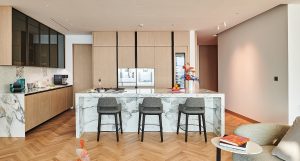
One at Palm Jumeirah penthouse with Studio Oak flooring, where eco-friendly choices support a clean and considered interior.
Sustainability Beyond the Material: Installation and Lifespan
Sustainability is not defined by material alone. Installation and long-term performance both shape the overall environmental impact of a floor.
Key factors during installation include:
- Adhesives: Some systems introduce VOCs into the indoor environment. Low-VOC adhesives or mechanical fixing methods are the more responsible options.
- Subfloor preparation: An uneven or unstable base leads to movement and premature wear.
- Underlays and membranes: These components vary in environmental profile and should be specified with the same care as the visible surface.
Poor installation carries a measurable environmental cost. A floor that fails early due to incorrect fitting or inadequate preparation requires full replacement, repeating the resource and energy input of the original installation.
Longevity remains the defining factor. Floors that are installed correctly and perform consistently over time represent the most sustainable outcome.
Certifications and Standards to Look For
Environmental claims are not always independently verified. Certifications provide a clearer basis for assessing credibility. Key certifications to recognise include:
- FSC (Forest Stewardship Council): Verifies that wood-based materials are sourced from responsibly managed forests with controlled harvesting, protected biodiversity, and respect for local communities. This is a baseline for engineered wood, bamboo, and other timber-based flooring.
- Low-VOC certifications (GREENGUARD, FloorScore): Test and verify chemical emissions to ensure indoor air quality standards are met. These are most relevant for vinyl flooring, adhesives, and finished surfaces.
- ISO 14001: Applies to the manufacturer rather than the product. It confirms that environmental impact is actively managed and reduced through a structured system.
When these certifications are present, environmental claims carry greater credibility. When they are absent, those claims require closer scrutiny.
Studio Oak AB herringbone flooring in a Maeen villa, showcasing an eco-friendly wood choice with natural texture.
Choose the Best Eco-Friendly Flooring for Your Home
There is no single answer to what defines the most sustainable floor. The right choice depends on the space, how it is used, and how the material performs over time.
What the most considered decisions share is a broader view. They account for sourcing, production, installation, maintenance, and lifespan as part of the same system rather than separate factors.
When these elements are aligned, the result is a floor that not only looks appropriate on completion, but continues to perform consistently over time.
Key Takeaways
Sustainable flooring is defined by how materials are sourced, used, and how they perform over time, not by a single attribute.
- Environmental impact is shaped by the full lifecycle, including sourcing, installation, maintenance, and how long the floor remains in use.
- Different materials serve different conditions, and suitability to the space is as important as the material itself.
- Verified certifications and proper installation provide the most reliable basis for assessing long-term environmental performance.

Warm Regards,
Pauline Madani
Founder & Managing Director Nordic Homeworx
Frequently Asked Questions
What is the least toxic type of flooring?
▼The least toxic flooring uses natural materials with low chemical emissions. Cork, natural linoleum, wool, and responsibly sourced wood are strong options. For manufactured products, low-VOC certifications such as GREENGUARD or FloorScore provide a reliable benchmark.
What is the best flooring for asthma sufferers?
▼Flooring that reduces dust retention and limits chemical emissions is generally more suitable. Hard, sealed surfaces such as engineered wood, concrete, and terrazzo are often preferred. Low-VOC certified materials also support better indoor air quality.
Does eco-friendly flooring require special cleaning products?
▼In most cases, yes. Many eco-friendly materials benefit from cleaning products that avoid harsh chemicals. Using manufacturer-recommended products helps maintain performance and longevity.
Can eco-friendly flooring increase property value?
▼Well-specified flooring can support property value when it aligns with the overall quality of the home. Durable materials such as engineered wood or terrazzo tend to retain their appearance over time. The impact depends on installation quality and suitability to the space.
How do I verify if a flooring product is genuinely eco-friendly?
▼Verification depends on independent certification and clear product information. Look for recognised standards such as FSC and low-VOC certifications. Reliable manufacturers provide transparent documentation on material composition and environmental performance.