



What is Chevron Flooring: Pattern, History, and Style Guide (2026)
March 9, 2026
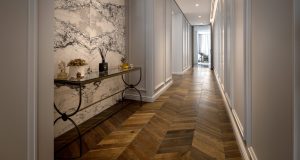
Oak Chevron Dark Brown at a private Al Khawaneej villa, where rich smoked tones and a classic chevron pattern define the character of the space.
When it comes to engineered wood flooring patterns, two designs consistently rise to the top of every conversation: chevron and herringbone. Both are rooted in centuries of European craftsmanship. Both feel luxurious underfoot. And yet, they create entirely different effects in a room and they are not the same design, despite how often they get used interchangeably.
If you are planning a renovation or choosing flooring for a new home, understanding this distinction matters. The pattern you select will shape the visual flow of your space, influence how large or intimate a room feels, and ultimately determine whether the floor complements or competes with the rest of your interior.
In this guide, we will explain the difference between chevron and herringbone flooring, explore how each pattern influences interior design, and help you decide which option best suits your home.
What Is Chevron Flooring
Cut at a precise angle, typically 45 or 60 degrees, and laid so that every end meets its neighbour in a clean, continuous V shape, this is the geometry that gives chevron flooring its character. The result is a seamless arrow-like line that runs unbroken across the entire floor.
That uninterrupted geometry is what makes chevron so distinctive. There are no staggered ends and no breaks in the pattern. The lines travel in one consistent direction, giving the floor a strong sense of movement and flow.
Key Characteristics of Chevron Flooring
Chevron is a pattern that rewards the right space and the right approach. Here is what defines it.
Directional Flow and Visual Impact
Chevron works particularly well where you want to draw the eye forward. Long corridors, open-plan living areas, and large reception rooms all benefit from its directional energy, with the uninterrupted V-shaped lines giving the floor a modern, graphic quality.
A Favourite in Contemporary Interiors
It is increasingly the pattern of choice in open-plan villas and high-rise residences where generous floor areas give the geometry room to make a real impression. It pairs naturally with clean-lined furniture, minimal colour palettes, and a pared-back Scandinavian aesthetic.
Precision at Every Stage
Because each plank must be cut at a matching angle before installation, chevron demands precision from manufacturing through to the skill of the installer on site. That attention to detail is what delivers the seamless, striking result the pattern is known for.
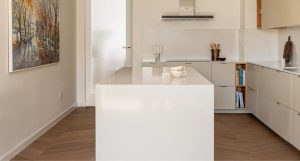
Dark honey tones and a classic chevron pattern at Ghadeer Villa, The Lakes, finished in Kährs Sensation Intention LVT.
What Is Herringbone Flooring
Herringbone is also a parquet pattern, but the geometry works differently. The planks are rectangular and uncut. They are laid in a staggered zigzag formation, with each board meeting the next at a 90-degree angle rather than a mirrored point.
The name comes from the skeleton of a herring fish, and once you see it, the resemblance is clear. The pattern creates a broken, interlocking zigzag that reads as texture rather than direction.
Key Characteristics of Herringbone Flooring
Herringbone carries a quiet confidence that feels earned. Here is what sets it apart.
European Heritage and Timeless Character
From French châteaux to boutique hotel lobbies, herringbone has always belonged in considered spaces. That quality translates just as naturally into luxury apartments, penthouse entrance halls, and villa interiors where warmth matters as much as modernity.
Warmth and Visual Balance
Where chevron flows, herringbone settles. It adds warmth and visual weight without directing the eye in any one direction, making it the natural choice where richness and texture take priority over movement.
Installation Considerations
Herringbone uses rectangular planks without angled cuts, making professional installation generally more accessible than chevron. Precision is still essential for symmetry, but the process is comparatively more forgiving.
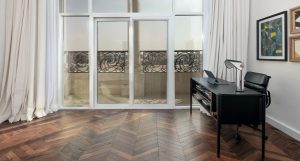
Al Falah Villa in Sharjah, where Studio Oak AB, Oak Lava, and Oak Chevron Dark Brown bring a distinct character to each bedroom.
Chevron vs. Herringbone Flooring: How These Patterns Are Different
Understanding chevron vs herringbone comes down to three things: how the pattern is built, how complex it is to install, and what it does to the feeling of a room.
Pattern Structure
The core difference is in the geometry of the join. In chevron flooring, the planks are cut at matching angles so their ends meet in a perfect point, forming one continuous V.
In herringbone, the planks are rectangular and laid so that the end of one board meets the side of another at a right angle, creating the staggered zigzag effect. The chevron pattern reads as a single repeating arrow, while the herringbone pattern reads as an interlocking texture.
Installation Complexity
Chevron requires more technical precision. Because every plank must be cut to an exact angle before it reaches the site, any variation in manufacturing or laying will disrupt the continuous point and break the visual line.
Herringbone is comparatively more forgiving. The rectangular planks are easier to handle, and the 90-degree joins are more straightforward to align. Both patterns, however, still demand expert flooring installation to achieve the symmetry and finish that makes patterned flooring worth choosing in the first place.
Visual Effect in a Room
Chevron creates a sense of direction and movement. It elongates a space and gives it a modern, graphic quality. Herringbone creates texture and depth. It anchors a room and gives it a sense of history and warmth. Neither is better in absolute terms; the rig
Which Pattern Works Best for Your Space
Choosing between chevron and herringbone is rarely just a question of personal preference. The proportions of your room and the character of your interior both play a role in determining which pattern will feel considered rather than forced.
Room Size
Chevron flooring tends to perform best in larger, more open spaces where its directional flow has room to breathe. Wide-plank chevron in a generous living room or entrance hall can be genuinely striking. In a smaller room, the same pattern can feel busy or overpowering.
Herringbone, by contrast, is more adaptable. It works in rooms of almost any size, and in compact spaces it can actually add a sense of richness and considered design that plain plank flooring cannot achieve.
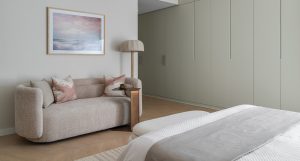
Kährs Fusion LVT in Chevron, bringing softness and directional movement to an Al Barsha villa interior.
Interior Design Style
If your home leans towards a Scandinavian, minimalist, or contemporary aesthetic, chevron flooring is a natural fit. Its clean geometry and sense of movement align with interiors that value simplicity and precision. Light oak species and matte lacquer finishes tend to work especially well in this context.
If your interior draws on classic European design, traditional detailing, or a warmer, more layered aesthetic, herringbone is the more intuitive choice. It has the kind of quiet depth that complements period features, antique furniture, and richer wood tones like smoked or brushed oak.
Why Precision Matters in Patterned Wood Flooring
Patterned flooring is unforgiving by nature. Every decision, from subfloor preparation to the first board laid, shapes the final result. Here is why getting each stage right matters.
-
Visual Impact
Because the eye naturally follows the geometry across the entire surface, even minor misalignments become noticeable in a way they simply would not with straight-lay planks. There is nowhere for error to hide in a patterned floor.
-
Subfloor Preparation
The subfloor must be level, clean, and structurally sound before any boards are laid. In climates where humidity and temperature fluctuate throughout the year, acclimatisation of the wood is just as important to ensuring a stable, long-lasting installation.
-
Engineered Wood Advantage
Engineered wood is particularly well-suited to patterned floors. Its multi-layer construction reduces the expansion and contraction that solid wood can experience, making it the more reliable choice in warmer, air-conditioned environments.
-
Planning and Symmetry
Industry best practice, supported by TRADA guidance on decorative timber flooring, stresses the importance of moisture control and careful planning of the starting point and centre line. This is what ensures the pattern remains symmetrical and visually balanced across the entire room.
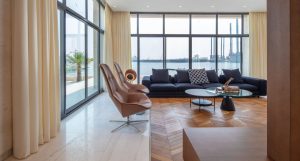
A contemporary waterfront villa in Al Hamra, Ras Al Khaimah, where Kährs Oak Chevron Light Brown brings natural warmth to an open, light-filled space.
Choosing the Right Chevron Flooring for Modern Interiors
Once you have decided on chevron, the next decisions are about species, finish, and scale.
Light oak in a white oil or pale matt lacquer finish works naturally in Scandinavian-inspired interiors. In spaces with high ceilings and abundant natural light, this finish makes a room feel both grounded and expansive at the same time.
Smoked or brushed oak in wider planks brings more drama, suited to interiors where a bolder statement is intentional. Narrower planks intensify the V-shaped pattern, while wider planks allow the natural grain and character of the wood to take a larger role.
Matching your floor to your interior palette from the start, rather than retrofitting it to an existing scheme, will always deliver the most cohesive result.
Timeless Flooring Patterns: Choosing Between Chevron and Herringbone
Both chevron flooring and herringbone share the same European origins and the same commitment to craftsmanship. What separates them is geometry, and geometry changes everything in a room. Chevron brings a clean, modern direction. Herringbone brings layered, classic texture. Understanding that difference is the starting point for choosing a pattern that genuinely serves your space rather than simply looking beautiful in isolation.
If you are weighing your options and want guidance on which pattern suits your layout, wood species, and interior style, explore our flooring solutions or speak with one of our specialists directly.

Warm Regards,
Pauline Madani
Founder & Managing Director Nordic Homeworx
Frequently Asked Questions
Can you mix chevron and herringbone flooring in the same home?
▼Yes, and it can work beautifully when done with intention. Chevron suits larger, open spaces like a main living area, while herringbone works naturally in adjoining rooms where a warmer, more contained feel is appropriate. The key is keeping the wood species and finish consistent across both so the home reads as cohesive.
Does chevron flooring make a room look bigger or smaller?
▼Chevron tends to elongate a room, particularly when the V points away from the entrance. In a smaller room, however, that same directional pull can feel restless rather than expansive, so room size is worth factoring into the decision.
Is herringbone flooring harder to clean than straight plank flooring?
▼Not significantly. With engineered wood, the surface finish determines ease of maintenance regardless of pattern. A matt lacquer or hardwax oil finish behaves the same way whether the boards are laid straight or in herringbone, and regular sweeping with occasional damp mopping is all that is typically needed.
Will either pattern date quickly, or are they long-term choices?
▼Both have been used in European interiors for centuries, which is a reasonable indicator of their staying power. Choosing based on your interior style rather than what is fashionable in a given season is always the more reliable approach.
Does patterned flooring cost more than straight-lay flooring?
▼Generally, yes. The additional cost comes from manufacturing precision and installation complexity, with chevron typically carrying a higher premium than herringbone. Patterned floors also require more material to account for wastage during fitting, though the investment tends to hold its value well in the property market.