


What Is the Difference Between Hardwood and Softwood? Flooring Guide
June 15, 2026
Key Takeaways
- Wood characteristics influence wear resistance, appearance, maintenance requirements, and how timber responds to everyday use.
- Long-term performance depends on more than category alone, with construction, finish, and site conditions often playing an equally important role.
- The most successful outcomes come from matching the material to the demands of the space rather than relying on assumptions about hardness alone.
Most people assume the names tell the whole story. Hardwood is hard. Softwood is soft. In practice, the distinction is botanical rather than physical, and understanding it can shape everything from durability and maintenance to the way a floor ages over time.
Hardwood vs Softwood: What’s the Difference?
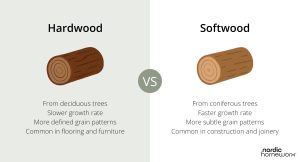
The distinction is based on where the wood comes from rather than how hard it is. Hardwood is sourced from deciduous trees, which shed their leaves seasonally, while softwood comes from conifers that typically retain their needles throughout the year.
These growth patterns affect cellular structure, grain character, and density, but they do not determine hardness on their own. Some hardwoods are surprisingly soft, while certain softwoods are exceptionally dense. As a result, individual material properties are often more important than classification when evaluating flooring performance.
Why the Difference Matters in Flooring
Few surfaces in a home experience more daily use than the floor beneath it. Every footstep, piece of furniture, and moment of activity places demands on the floor over time.
The characteristics associated with different wood varieties determine how they respond to those demands. Resistance to denting, dimensional stability, grain definition, and maintenance requirements can vary considerably, affecting both appearance and long-term durability.
Environmental conditions also play a role. Changes in temperature and humidity influence how natural wood behaves, making some species better suited to particular settings than others.
This is why the distinction matters. The category alone does not determine suitability, but understanding how different species behave provides a more reliable foundation for making informed flooring decisions.
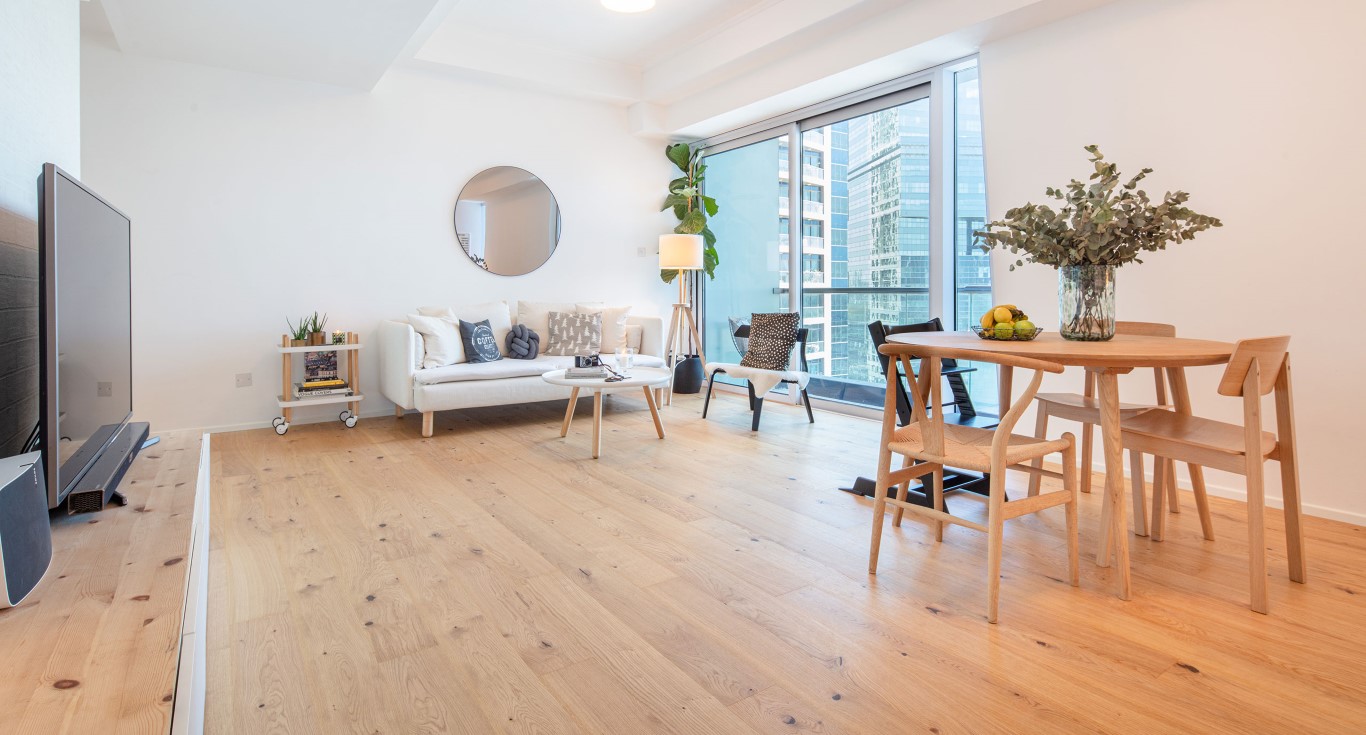
White-oiled hardwood flooring bringing natural warmth to this Shoreline Residences apartment.
Hardwood Flooring: Characteristics and Advantages
Many hardwood varieties remain popular in residential settings because they balance durability with aesthetic appeal. While individual varieties vary considerably, several shared qualities make hardwood a common choice for long-term flooring applications.
- Greater resistance to everyday wear helps maintain surface condition in busy areas of the home.
- Refinishing potential allows many products to be sanded and restored, extending their usable lifespan.
- More defined grain patterns introduce texture and visual depth without relying on artificial finishes.
- A wide range of colours and finishes provides flexibility across both contemporary and traditional interiors.
These qualities explain why hardwood continues to be specified across a broad range of residential projects, though performance still varies between individual options.
Popular Hardwood Species for Flooring
Performance and appearance can vary considerably between individual options, making selection just as important as the category itself.
Oak
Oak remains one of the most widely specified flooring materials because of its balance of durability, stability, and finishing versatility. Homeowners exploring different wood flooring options often find oak remains one of the most versatile choices available. It responds predictably to stains, oils, and surface treatments, making it suitable for a wide range of interior styles. Its restrained grain and organic appearance align particularly well with contemporary and Scandinavian-inspired spaces.
Ash
Ash is recognised for its lighter tone and more pronounced grain pattern. It also offers a degree of natural resilience that makes it well suited to active households where everyday wear is a practical consideration.
Walnut
Walnut is often chosen for its richness of colour and visual depth rather than outright hardness. Although softer than many people expect, its distinctive character brings warmth and contrast to interiors where visual richness plays a more prominent role.
Maple
Maple offers a cleaner and more consistent look than many other species. Its subtle grain and balanced colour palette suit minimalist schemes where visual continuity is prioritised over strong pattern variation.
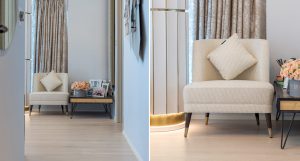
Light-toned hardwood flooring creating a bright and refined backdrop within this Marina Quays apartment.
Softwood Flooring: Characteristics and Limitations
Softwood remains an important timber category, though it is typically used in different contexts than hardwood. While certain species can be suitable for residential applications, their characteristics often require a more considered approach to specification and maintenance.
- A softer surface profile makes marks, dents, and impressions more likely to appear over time, particularly in heavily used areas.
- Faster growth rates generally make softwood more accessible and cost-effective than many hardwood alternatives.
- Lighter colour palettes and subtler grain patterns suit interiors where a brighter, more informal aesthetic is preferred.
- Regular maintenance becomes more important, as surface wear tends to become visible sooner under everyday use.
These qualities do not make softwood unsuitable for flooring, but they do influence where it performs best and the expectations homeowners should have over its lifespan.
Common Softwood Species
Although often grouped together, individual softwoods differ noticeably in appearance, grain character, and the environments for which they are best suited.
Pine
Pine is the most widely used softwood for flooring. Its warm colour variation and distinctive grain contribute to a relaxed, lived-in appearance that suits traditional homes, cottages, and rustic interiors.
Fir
Fir is recognised for its pronounced grain pattern and natural variation. It is often selected for spaces where visual richness and texture are intended to play a more prominent role within the overall design.
Cedar
Cedar is valued for its natural resistance to moisture and biological decay. While less common as a primary flooring option, it is often used in specialist applications where environmental conditions require greater resilience.
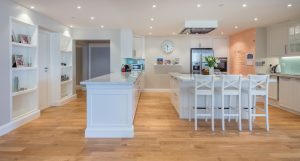
Oak hardwood flooring supporting everyday family living throughout this renovated Rimal apartment.
Is Hardwood Always Harder Than Softwood?
No. Hardwood and softwood describe how a tree is classified, not how resistant the material is to denting or wear. For that reason, professionals rely on hardness ratings rather than category labels when comparing different woods.
One of the most widely used measurements is the Janka hardness test, which assesses the force required to embed a steel ball into the surface of a wood sample. The higher the rating, the greater the resistance to indentation under concentrated load.
The differences can be considerable, even among materials commonly used in residential projects.
| Species | Classification | Typical Janka Hardness Rating (lbf) |
| Pine | Softwood | 380 to 870 |
| Walnut | Hardwood | 1,010 |
| White Oak | Hardwood | 1,360 |
| Maple | Hardwood | 1,450 |
| Yew | Softwood | ~1,520 |
| Brazilian Cherry | Hardwood | 2,800+ |
This range illustrates why classification alone provides only part of the picture. Despite being a softwood, Yew achieves a higher Janka rating than some hardwoods commonly used in flooring. Conversely, Balsa is classified as a hardwood despite being one of the softest commercial woods available. Measured performance is therefore a more reliable guide than botanical classification alone.
While hardness is useful for comparison, it should be considered alongside other factors when selecting flooring materials.
Why Engineered Wood Flooring Uses Hardwood
Engineered wood flooring is designed to combine the visual qualities of hardwood with the practical benefits of a multi-layer construction. Rather than relying on a single piece of solid wood, it pairs a genuine hardwood wear layer with a stable core made from plywood, high-density fibreboard, or similar engineered materials.
This arrangement allows each component to serve a specific purpose. The visible layer provides the grain, colour variation, and natural character associated with traditional timber, while the underlying structure improves consistency across a wider range of interior conditions.
The result is a product that retains the appearance of solid wood while offering greater versatility in modern homes. Many engineered products are also installed as floating floors, a method that has become increasingly popular because of its efficiency and flexibility. This balance of aesthetics and practicality is one reason engineered flooring is now widely specified across a broad range of residential environments.
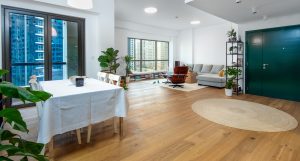
Character-grade hardwood flooring introducing natural variation throughout this renovated Rimal apartment.
Hardwood vs Softwood Flooring: Which Is Better?
Hardwood and softwood serve different priorities. The more useful question is not which is better, but which is better suited to the demands of the space and the expectations of the homeowner.
For Busy Households
Where durability and long-term resilience are priorities, hardwood is often the more practical choice. Its ability to withstand everyday activity makes it particularly well suited to frequently used living areas, hallways, and family homes.
For Character and Natural Ageing
Some homeowners value a material that evolves visibly over time. Softwood develops signs of use more readily, creating a lived-in appearance that can complement traditional, rustic, or informal interiors.
For Contemporary Residential Design
Modern interiors often favour consistency, restrained grain patterns, and a balanced colour palette. Material selection, board format, and finish tend to contribute more to the final result than whether the material is classified as hardwood or softwood.
Hardwood vs Softwood and Sustainability
A faster-growing timber is not automatically the more responsible choice. Growth rates play a role, but sourcing practices and service life often have a greater impact on the overall environmental footprint.
Softwoods generally reach maturity more quickly, allowing forests to be replenished within shorter cycles. Hardwoods take longer to grow, but responsibly managed forestry programmes ensure many varieties can be harvested without compromising long-term forest health.
Longevity also matters. Materials that remain in use for decades reduce the demand for replacement products, transportation, and additional manufacturing. In many cases, a well-maintained floor with a long service life can be a more responsible choice than a lower-cost alternative that requires frequent replacement.
Ultimately, certification, responsible sourcing, and expected lifespan provide a more meaningful measure of sustainability than category alone.
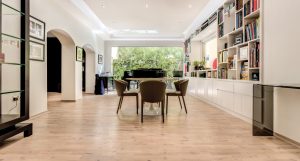
Wide-format hardwood flooring contributing to the bright interior of this Hattan family home.
Factors More Important Than Hardwood vs Softwood
Species classification provides useful context, but it is rarely the single factor that determines long-term results. Several factors have a greater bearing on visual outcome, durability, and long-term satisfaction. In many projects, choosing between hardwood and softwood is only one stage of a much wider flooring decision.
- Construction type often has a greater impact than timber classification alone. Multi-layer products typically provide greater consistency across changing indoor conditions than solid alternatives.
- Wear layer thickness determines how many times a surface can be refinished, directly affecting lifespan and future maintenance options.
- Finish selection is a significant factor in protecting against abrasion, staining, and everyday use. A well-chosen finish can be just as important as the layer beneath it.
- Board dimensions shape both appearance and performance. Wider formats create a different visual rhythm and may require more careful planning depending on site conditions.
- Preparation standards influence how successfully the material performs once installed. Even premium products can be compromised by deficiencies in the supporting structure beneath them.
A carefully considered specification often delivers better results than focusing solely on botanical classification.
Hardwood and Softwood in Modern Interior Design
Few materials influence the atmosphere of an interior as extensively as the surface beneath it. Colour variation, grain expression, and texture all shape how a space is perceived long before furniture or decorative elements are introduced.
In contemporary homes, surface selection is often guided by the atmosphere a project is intended to create. More restrained grain patterns and balanced tonal variation tend to support calm, cohesive interiors, while stronger visual interest can introduce warmth, contrast, or a greater sense of informality.
The most successful schemes consider flooring as part of a wider material palette rather than an isolated feature. When aligned with the architecture, finishes, and natural light within a home, the result feels intentional and visually resolved.
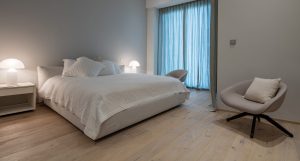
Oak Olof hardwood flooring introducing subtle grain definition within this minimalist Cayan Tower apartment.
Choosing Between Hardwood and Softwood Flooring
Hardwood and softwood provide useful context, but they rarely tell the whole story. Long-term results depend on how material selection, construction, finish, and site conditions come together within a single specification.
The most successful projects begin with a clear understanding of how a space will be used and what demands it will place on the floor over time. When those considerations guide the decision-making process, the outcome is more likely to remain functional, visually consistent, and appropriate for years to come.

Warm Regards,
Pauline Madani
Founder & Managing Director Nordic Homeworx
Frequently Asked Questions
Can You Mix Hardwood and Softwood Flooring in the Same Home?
▼Yes, provided the transition is intentional. A common approach is to use more durable materials in heavily used areas such as hallways, kitchens, and living spaces, while reserving softer options for bedrooms or home offices. Consistent colour undertones and carefully considered transitions help maintain visual continuity throughout the home.
Does the Colour of Wood Change Over Time?
▼Yes. Natural wood continues to respond to its environment long after installation. Exposure to sunlight, oxygen, and everyday use can gradually alter colour and tone. Some species darken with age, while others become lighter or develop a richer appearance. This natural evolution is one of the characteristics that gives real wood its lasting appeal.
Can Reclaimed Wood Be Used for Flooring?
▼Yes. Reclaimed wood refers to the source of the timber rather than the species itself. Reclaimed Oak remains Oak, while reclaimed Pine remains Pine. When considering reclaimed products, factors such as structural condition, previous treatment, and dimensional stability are often more important than classification alone.
Does Hardwood Flooring Add More Resale Value Than Softwood?
▼In many cases, yes. Buyers often associate hardwood with longevity, durability, and lower long-term maintenance requirements. While a well-maintained softwood floor can add considerable character, particularly in period properties, hardwood generally appeals to a broader segment of the market and tends to contribute more positively to perceived value.
Which Option Is Better for Homes With Pets?
▼For households with dogs or other active pets, harder species typically provide greater resistance to scratches, dents, and everyday wear. That said, surface protection is equally important. A durable finish can significantly improve performance and help minimise the visibility of minor marks over time.