


Wood Flooring Types: Definition, Species, and Considerations
December 5, 2025
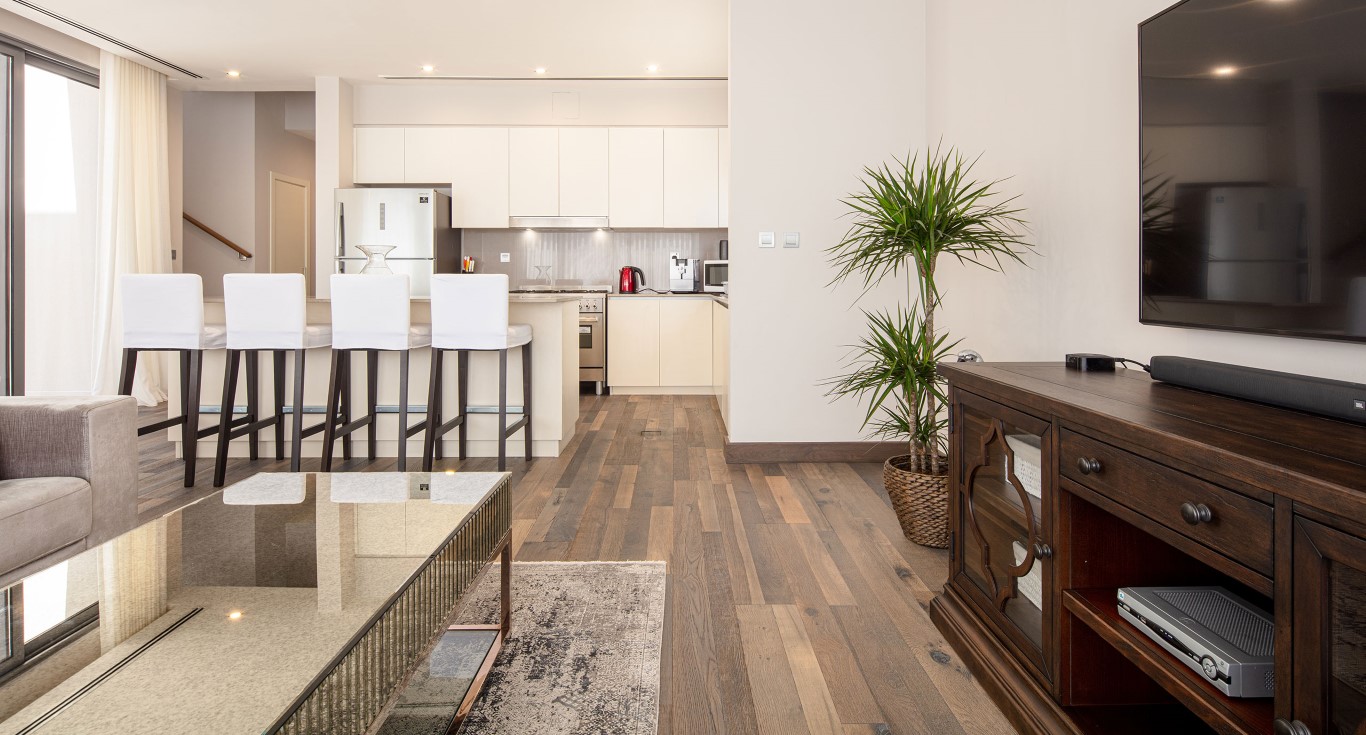
A warm, lived-in feel comes to life at this Sidra Villa in Dubai Hills Estate, Dubai, where rustic Kährs flooring with a vintage look transforms the modern space into a cosy family home.
Wood flooring remains one of the most enduring interior design choices. It adds warmth, texture, and long-term value to residential and commercial spaces alike. When selected well, it becomes part of a home’s story rather than just a surface underfoot.
We approach wood flooring as both a craft and a commitment. We work with natural materials, refined processes, and thoughtful design decisions to deliver floors that age beautifully and perform reliably. This guide explores wood flooring types in detail, from clear definitions and species to practical considerations that influence long-term satisfaction.
If you are exploring options or planning a new project, this blog provides a complete foundation for making informed decisions about wood flooring types.
Understanding Wood Flooring
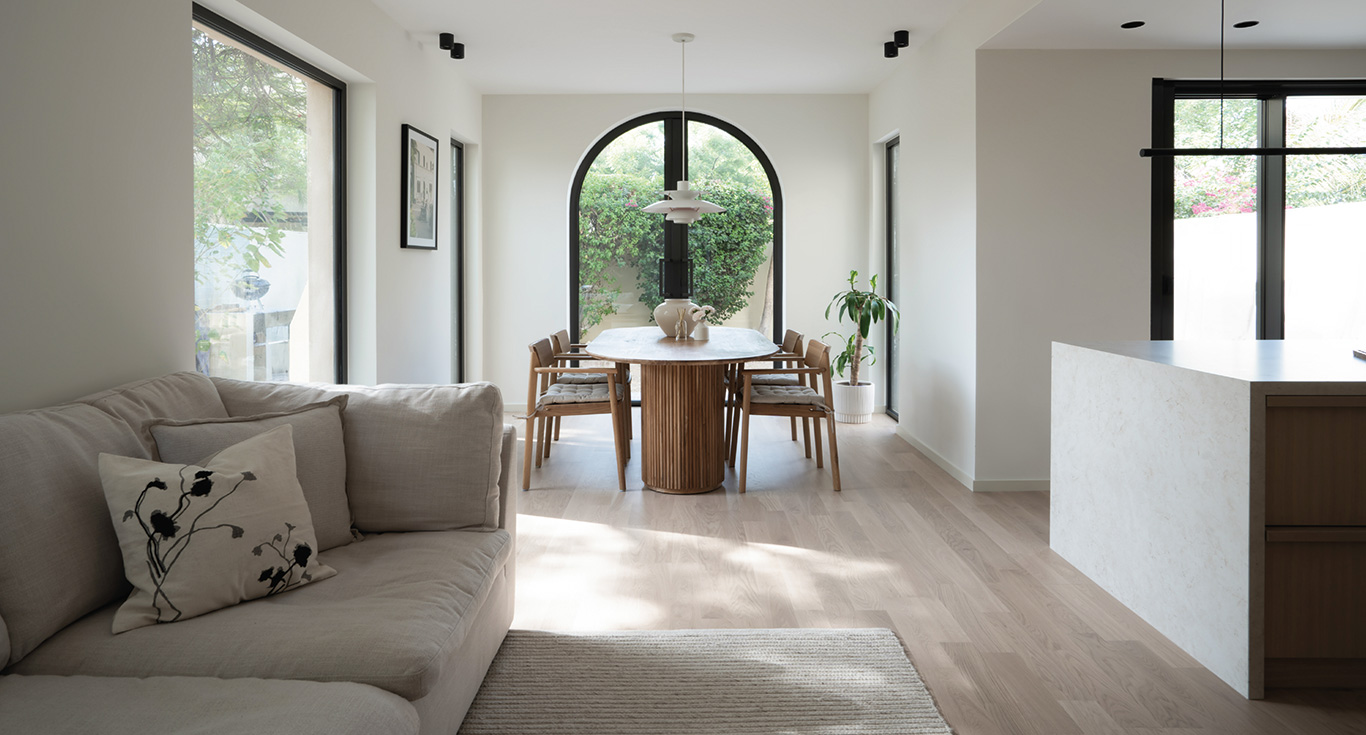
A timeless renovation at Springs Townhouse, Dubai, where Kährs Oak Portofino flooring introduces warmth, subtle grain, and a soft white finish that blends seamlessly with earthy sable tones throughout the home.
Before comparing products or finishes, it helps to understand what defines wood flooring. While all wood floors share a natural origin, their structure, composition, and performance vary significantly.
What Is Wood Flooring?
Refers to floor coverings made primarily from timber. Manufacturers mill, treat, and finish the wood to create planks, boards, or blocks suitable for interior use. Depending on the construction, it can consist of solid timber or multiple layers bonded together.
Wood flooring types differ in thickness, stability, installation method, and compatibility with modern building conditions. Understanding these differences helps avoid costly mistakes and ensures the floor suits the space.
Wood floors adapt to changing styles without losing relevance. They complement minimalist interiors, traditional homes, and contemporary architecture with equal ease. Beyond appearance, wood offers durability, repairability, and environmental benefits when sourced responsibly.
Main Types of Wood Flooring
Wood flooring generally falls into three primary categories. Each serves different needs, budgets, and environments.
1. Solid Wood Flooring
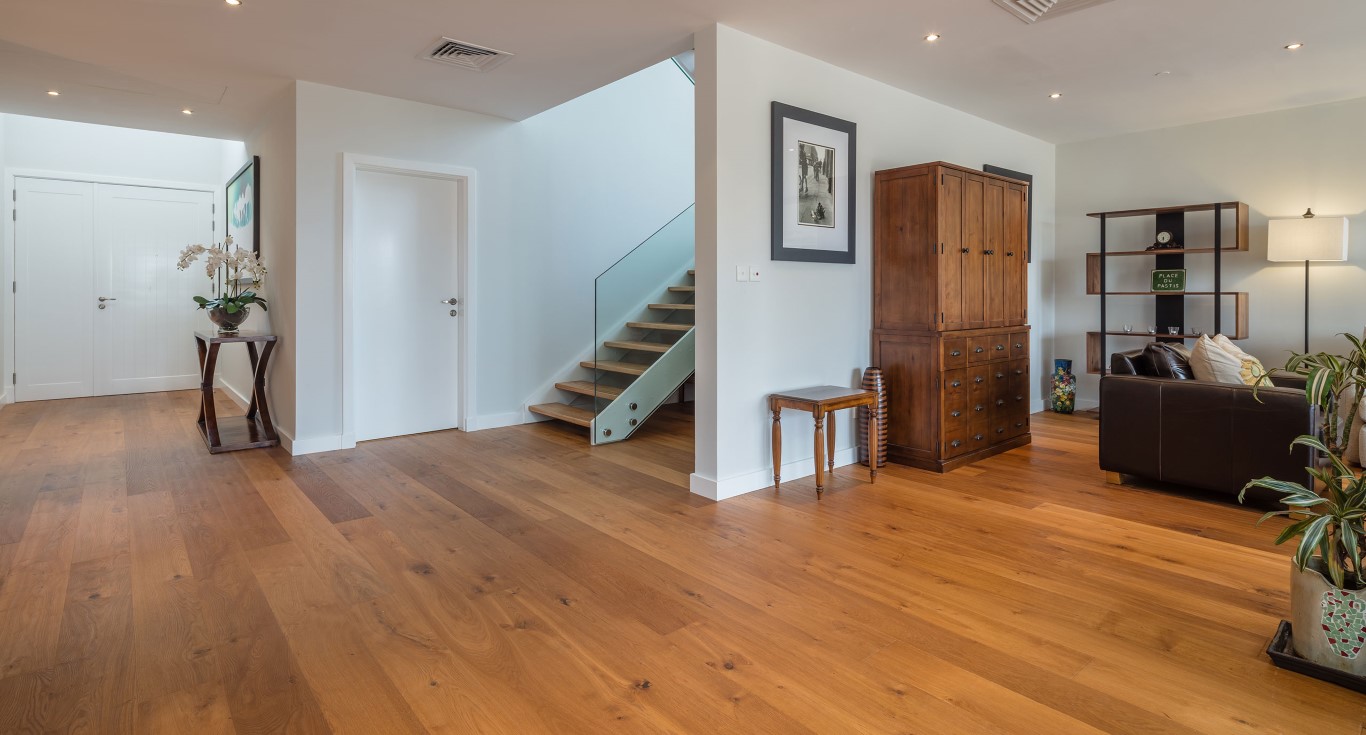
Smokey-brown wood flooring at Savannah Villa in Arabian Ranches, Dubai, layered across both levels with Oak Sevede and Oak Palazzo Fumo.
Solid wood flooring consists of planks milled from a single piece of timber. Each board carries the full depth of natural wood, typically ranging from 18 mm to 22 mm thick.
Key Characteristics of Solid Wood Floors
Solid wood offers authenticity and longevity. It can be sanded and refinished multiple times over decades, making it a long-term investment. The grain, knots, and colour variations reflect the tree’s natural growth.
However, solid wood reacts more strongly to humidity and temperature changes. It expands and contracts with seasonal shifts, which makes installation conditions critical.
Where Solid Wood Works Best
Solid wood suits areas with stable indoor climates, such as living rooms, bedrooms, and formal spaces. It performs best in properties with controlled humidity and traditional subfloors.
We typically recommend solid wood when clients prioritise heritage appeal and long-term refinishing potential.
2. Engineered Wood Flooring
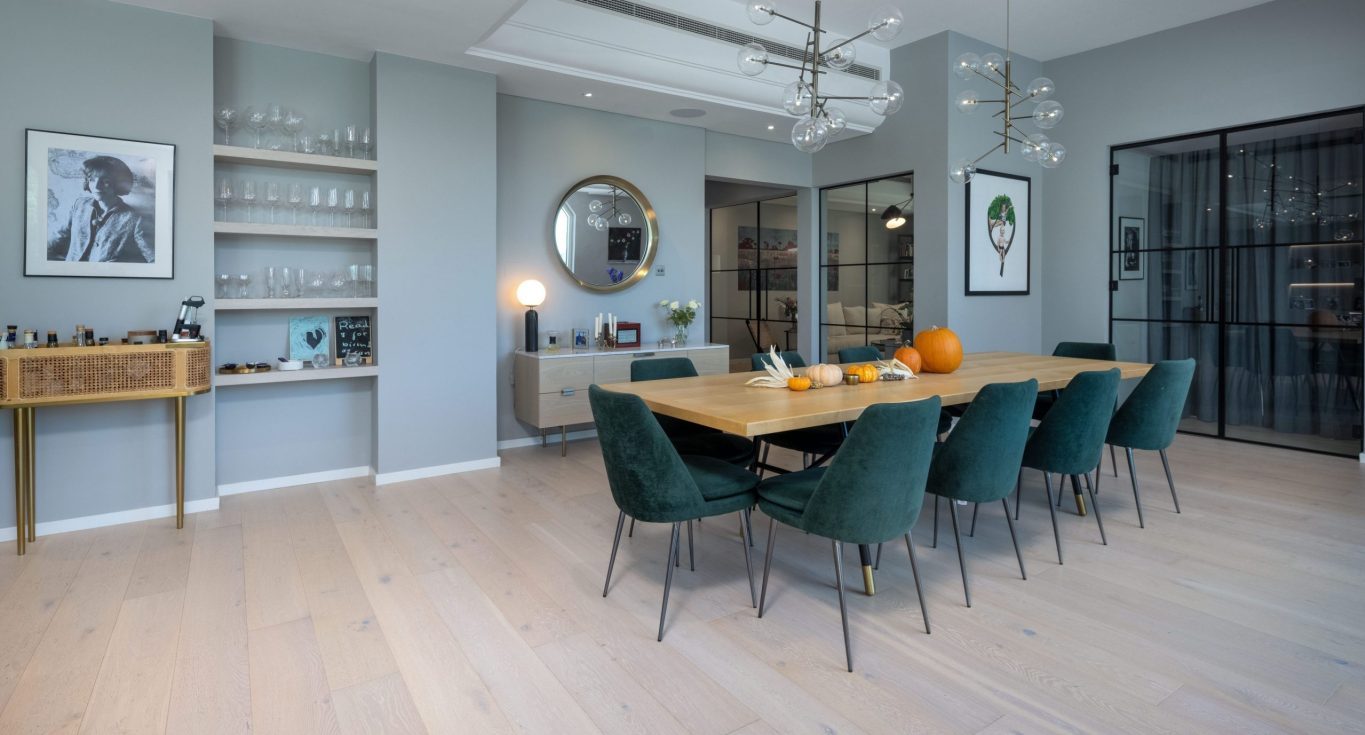
Kährs Oak Nouveau Blonde flooring sets a calm, light-filled tone in this Esmeralda Villa in Victory Heights, Dubai, finished in matt lacquer for everyday family living.
Engineered wood features a top layer of real hardwood bonded to multiple layers of plywood or softwood beneath. This layered construction enhances stability without compromising the natural appearance.
Benefits of Engineered Wood Flooring
Engineered floors resist movement caused by moisture and temperature changes. They suit modern buildings, apartments, and spaces with underfloor heating. The wear layer determines how often the floor can be refinished, which varies by product.
From a visual perspective, engineered wood looks indistinguishable from solid wood once installed.
Practical Applications
Engineered wood performs well in open-plan layouts, kitchens, and properties with concrete subfloors. It allows for wider planks and more contemporary formats without sacrificing performance.
3. Parquet Wood Flooring
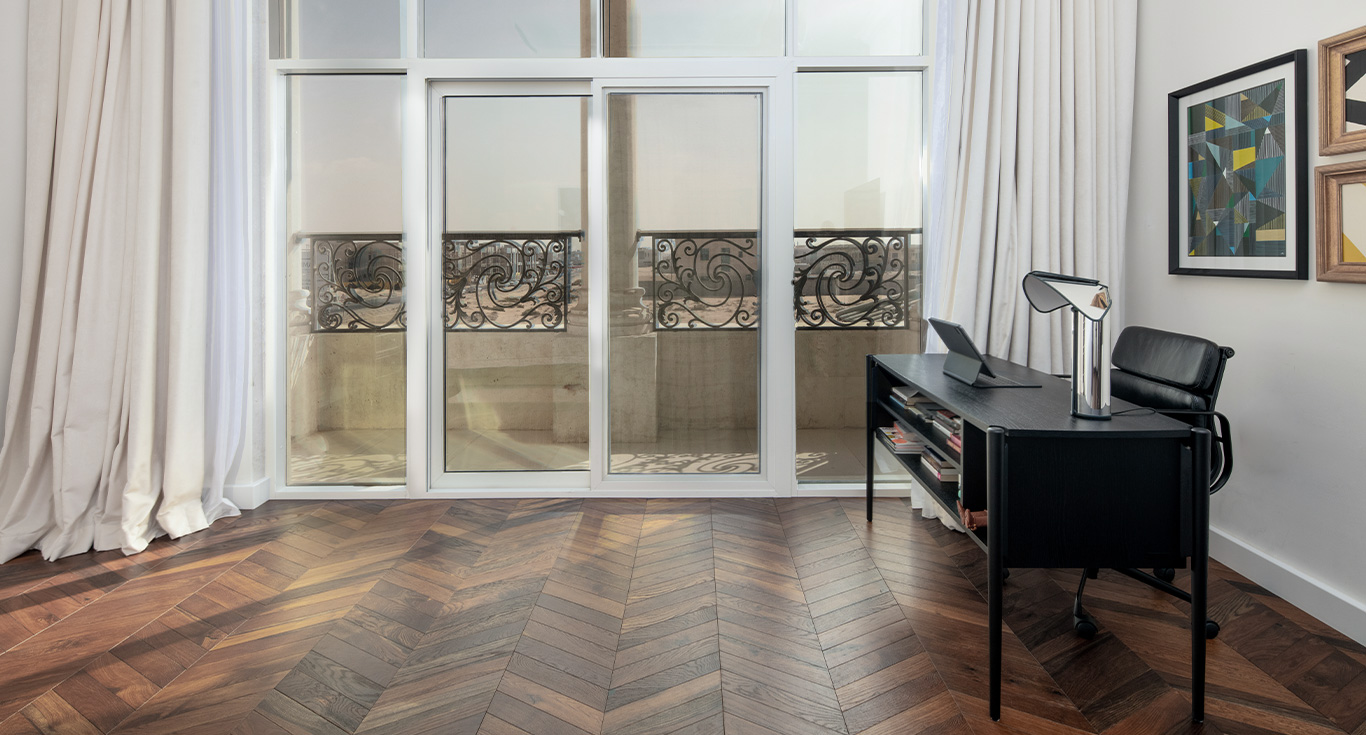
Distinct bedroom designs come together at this Al Falah Villa in Al Falah Suburb, Sharjah, each completed with a complementary Kährs wood floor.
Parquet flooring uses smaller wood pieces arranged in geometric patterns rather than long planks. Common designs include herringbone, chevron, basket weave, and Versailles panels.
Defining Features of Parquet Flooring
Parquet highlights craftsmanship and design detail. It introduces visual movement and texture, making it ideal for statement interiors. Parquet floors can be solid or engineered, depending on construction. The installation requires precision, which influences cost and timeline.
Ideal Spaces for Parquet
Parquet suits living rooms, dining areas, and feature spaces where the floor acts as a design focal point. We often integrate parquet into projects that require architectural depth and character.
Wood Species Used in Flooring
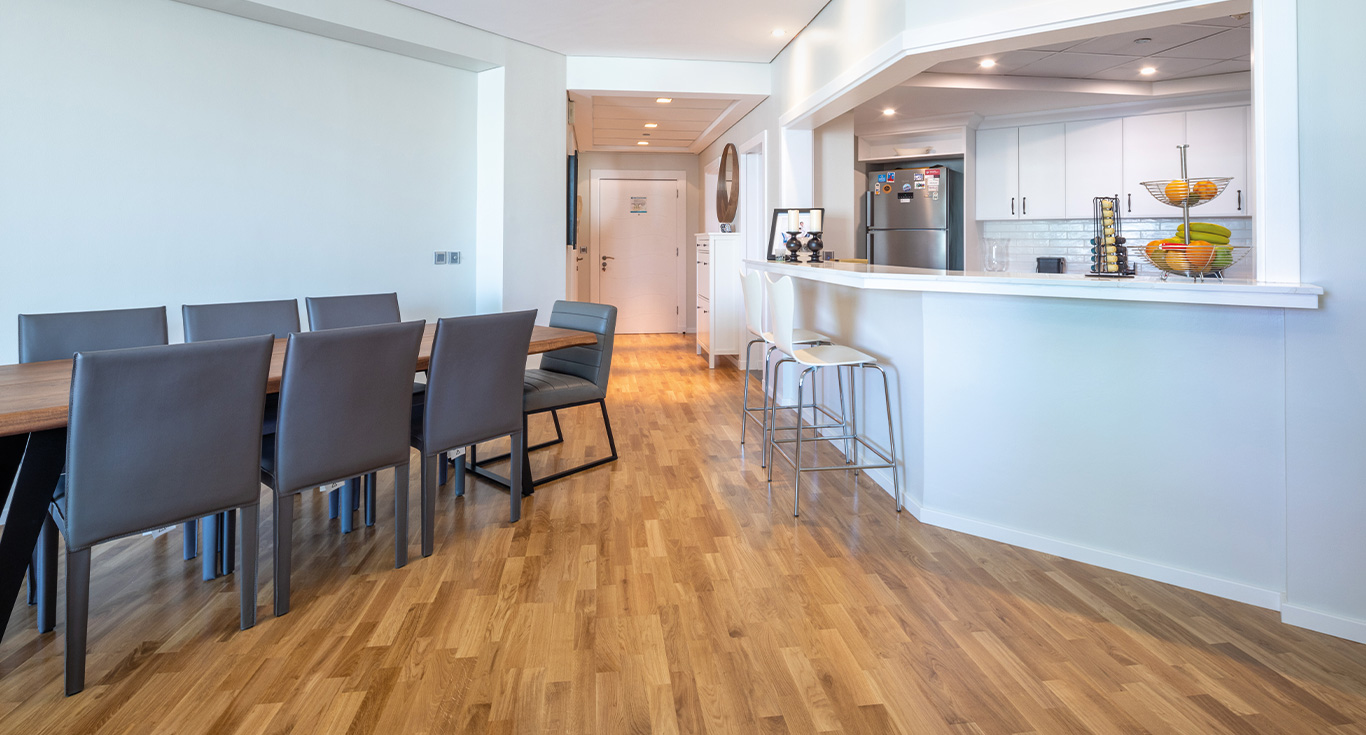
A classic Swedish 3-strip natural oak floor brings natural character and continuity to this Shorelines Apartment on Palm Jumeirah, Dubai, creating a calm and cohesive family home.
The species of wood affects colour, hardness, grain pattern, and ageing behaviour. Choosing the right species makes it easier to match flooring with furniture, wall colours, and finishes, creating a balanced and cohesive interior.
Oak Flooring
Remains the most popular choice for wood flooring. Oak balances durability, versatility, and visual appeal. It accepts stains well, allowing for a wide colour range from pale Scandinavian tones to rich smoked finishes. Its grain adds character without overwhelming the space. Oak also performs well in engineered formats, making it suitable for modern interiors.
Walnut Flooring
Walnut offers a darker, more luxurious appearance. It features deep brown tones with subtle purples and greys. Its smooth grain creates a refined, elegant surface. While slightly softer than oak, it suits low- to medium-traffic areas well. Walnut floors develop a rich patina over time, enhancing their depth.
Maple Flooring
Maple presents a lighter, contemporary look. It has a fine, uniform grain with creamy tones and suits modern interiors that favour minimalism and clean lines. Maple floors are hard and durable, though they show wear more visibly due to their light colour.
Ash Flooring
Ash flooring delivers bold grain and natural brightness. It combines strength with elasticity, making it resilient underfoot. Its pronounced grain adds texture and visual interest. Designers often select ash for Scandinavian-inspired spaces.
Cherry Flooring
Cherry offers a warm, refined aesthetic that deepens beautifully with age. It starts with soft reddish-brown tones that gradually darken when exposed to light, creating a rich, elegant patina. Cherry floors have a smooth, subtle grain and suit low-traffic areas where their natural warmth and colour evolution can be fully appreciated.
Exotic Wood Species
Exotic woods include teak, merbau, and jatoba. These species offer striking colours and dense structures. However, they often come with higher costs and sustainability considerations. We recommend verifying responsible sourcing and suitability for local climate conditions.
Wood Flooring Grades Explained
Wood grade classifies timber based on its natural features after milling. These features include knots, mineral streaks, colour shifts, sapwood presence, and surface variation. Manufacturers sort boards into grades so designers and homeowners can select a consistent visual style.
A higher grade does not mean better quality. It means fewer visible characteristics. A lower grade does not mean defects. It means more of the tree’s natural story remains visible.
Prime or Select Grade
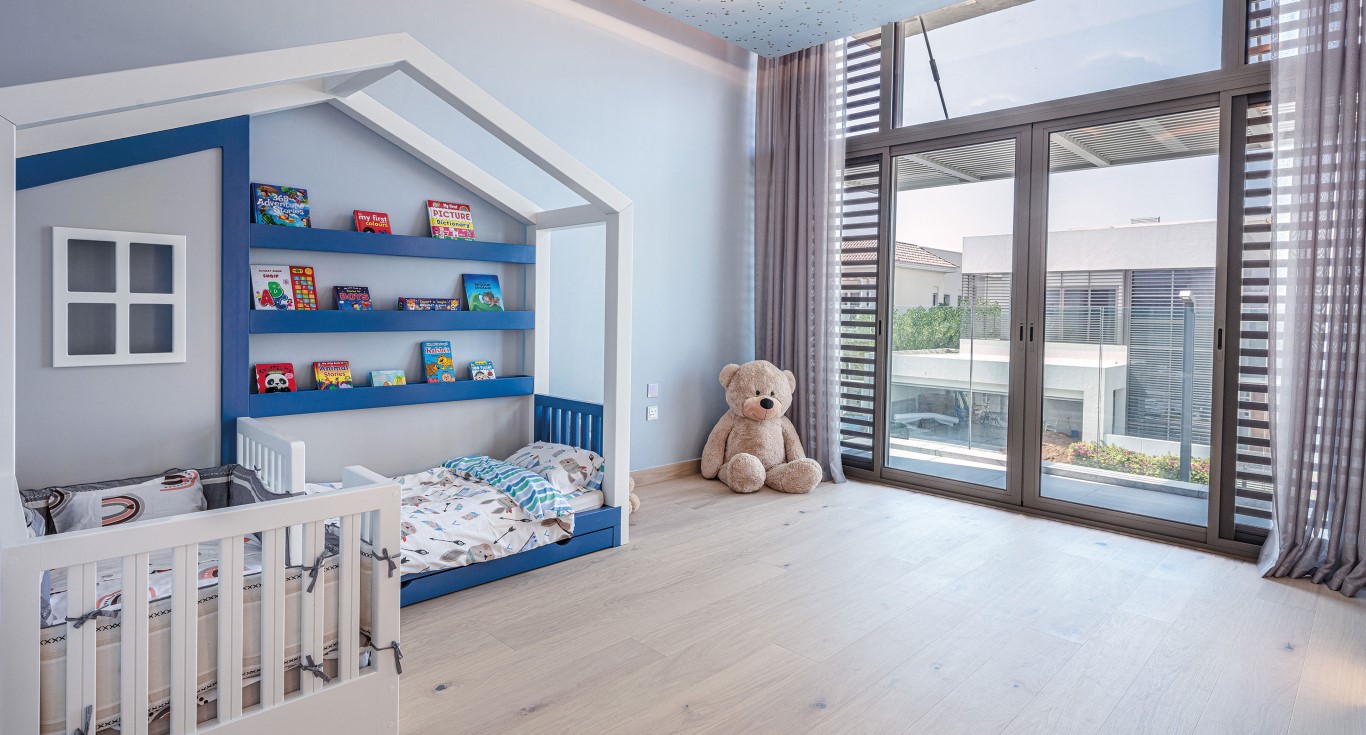
A soft, playful bedroom comes to life in this District One Villa in Mohammed Bin Rashid City, Dubai, featuring ultra matt Kährs Oak Sky flooring and bespoke Elli Junior furniture with matching oak detailing.
Prime, also called Select, focuses on uniformity and restraint.
Boards typically include:
- Minimal knots or none at all
- Consistent colour tone
- Subtle, even grain patterns
This grade suits modern and minimalist interiors where clean lines matter. It works well in apartments, contemporary villas, and commercial spaces that require a refined, controlled look.
Natural or Classic Grade
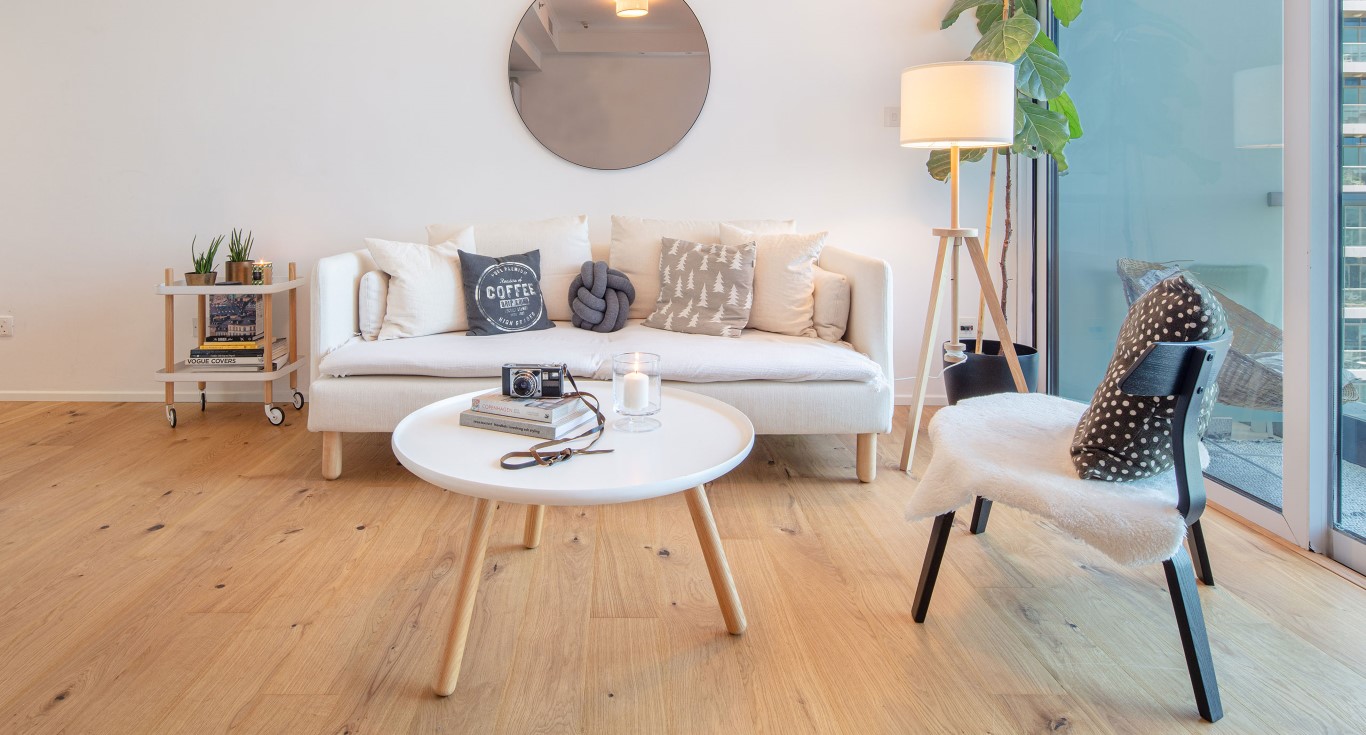
A calm Scandinavian mood defines this Goldcrest Views Apartment in Jumeirah Lakes Towers, Dubai, where rustic Kährs Oak Village flooring grounds the light-filled minimalist interior. </p >
Natural or Classic grade strikes a balance between clean design and organic character.
Boards typically include:
- Small to medium knots
- Gentle colour variation
- Visible but balanced grain movement
This grade feels warm and authentic without appearing busy. It suits family homes, open-plan living spaces, and interiors that aim for timeless comfort rather than strict uniformity.
Rustic Grade
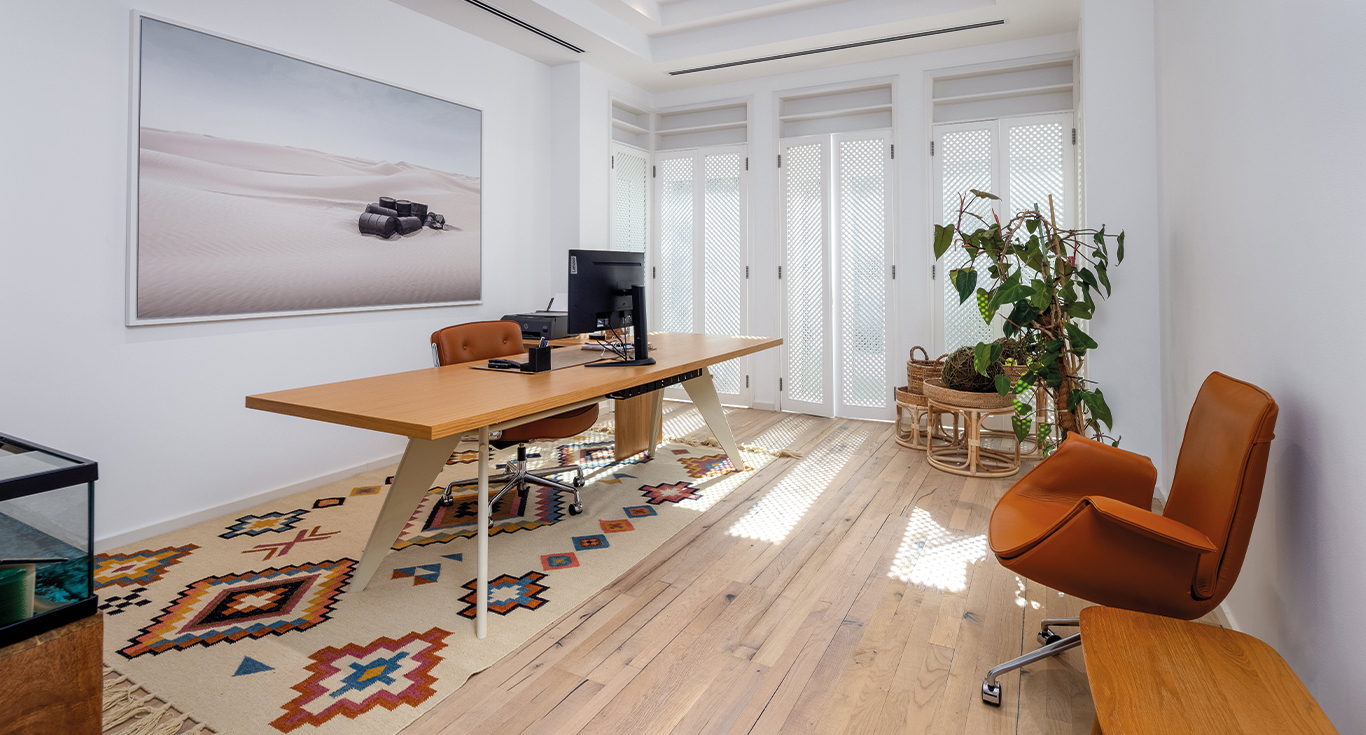
A refined blend of modern Balinese style and Scandinavian simplicity shapes this Hattan Villa in The Lakes, Dubai, creating a thoughtfully layered family home.
Rustic grade celebrates the wood’s raw, expressive nature.
Boards often feature:
- Large and frequent knots
- Visible cracks and filled splits
- Strong colour contrasts and grain variation
These elements are intentional and structurally sound. Rustic floors suit country homes, coastal spaces, loft-style interiors, and designs that value texture, depth, and individuality.
Key Considerations Before Choosing Wood Flooring
Selecting wood flooring involves more than appearance. Performance, comfort, and long-term satisfaction depend on how well the floor suits your space, lifestyle, and expectations.
Finishes and Surface Treatments
The finish protects the wood and shapes its final look, feel, and maintenance needs. It influences how the floor ages, how well it resists daily wear, and how much care it requires over time. Choosing the right surface treatment ensures the floor performs well while maintaining its intended aesthetic.
Lacquered finishes form a sealed surface that resists stains, spills, and heavy use, making them ideal for busy homes. Oiled finishes penetrate the wood to enhance grain and texture, creating a natural feel that requires periodic re-oiling. Hardwax oil sits between the two, offering improved surface protection while retaining a natural appearance and allowing easy spot repairs.
Climate and Humidity
Wood is a natural material that responds continuously to moisture in the surrounding air. Changes in humidity cause wood flooring to expand and contract, which can lead to gaps, cupping, or surface movement when conditions fluctuate too often. Maintaining stable indoor humidity reduces stress on the boards and helps preserve their original shape.
Proper acclimatisation before installation allows the wood to adjust to its new environment. Consistent climate control after installation supports long-term performance and reduces the likelihood of structural issues developing over time.
Installation Methods
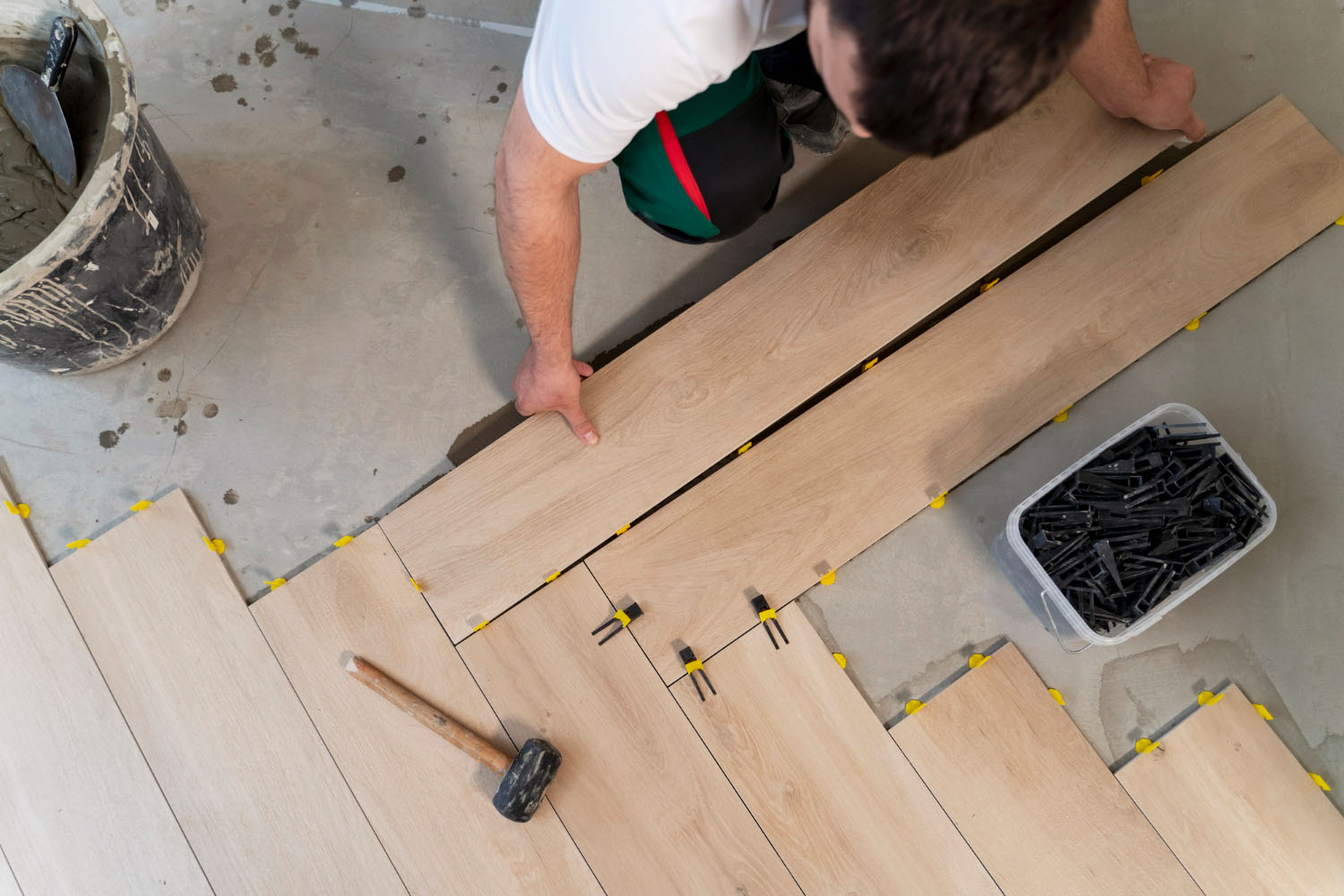
Installation plays a critical role in long-term floor performance. The correct method improves stability, controls movement, reduces noise, and supports the floor’s overall lifespan.
Nail-down installation suits solid wood over timber subfloors and allows natural seasonal movement. Glue-down installation works best for concrete bases and parquet designs, improving stability and acoustic comfort. Floating installation uses locking systems without fixing to the subfloor, making it ideal for engineered wood and faster installations with minimal disruption.
Underfloor Heating Compatibility
Underfloor heating places constant thermal pressure on wood flooring, which makes material selection critical. Engineered wood performs best because its layered construction limits movement caused by repeated heating and cooling cycles.
Careful temperature regulation remains essential to protect the floor. Professional installation ensures gradual heat transfer, correct spacing, and long-term compatibility between the heating system and the wood.
Lifestyle and Traffic
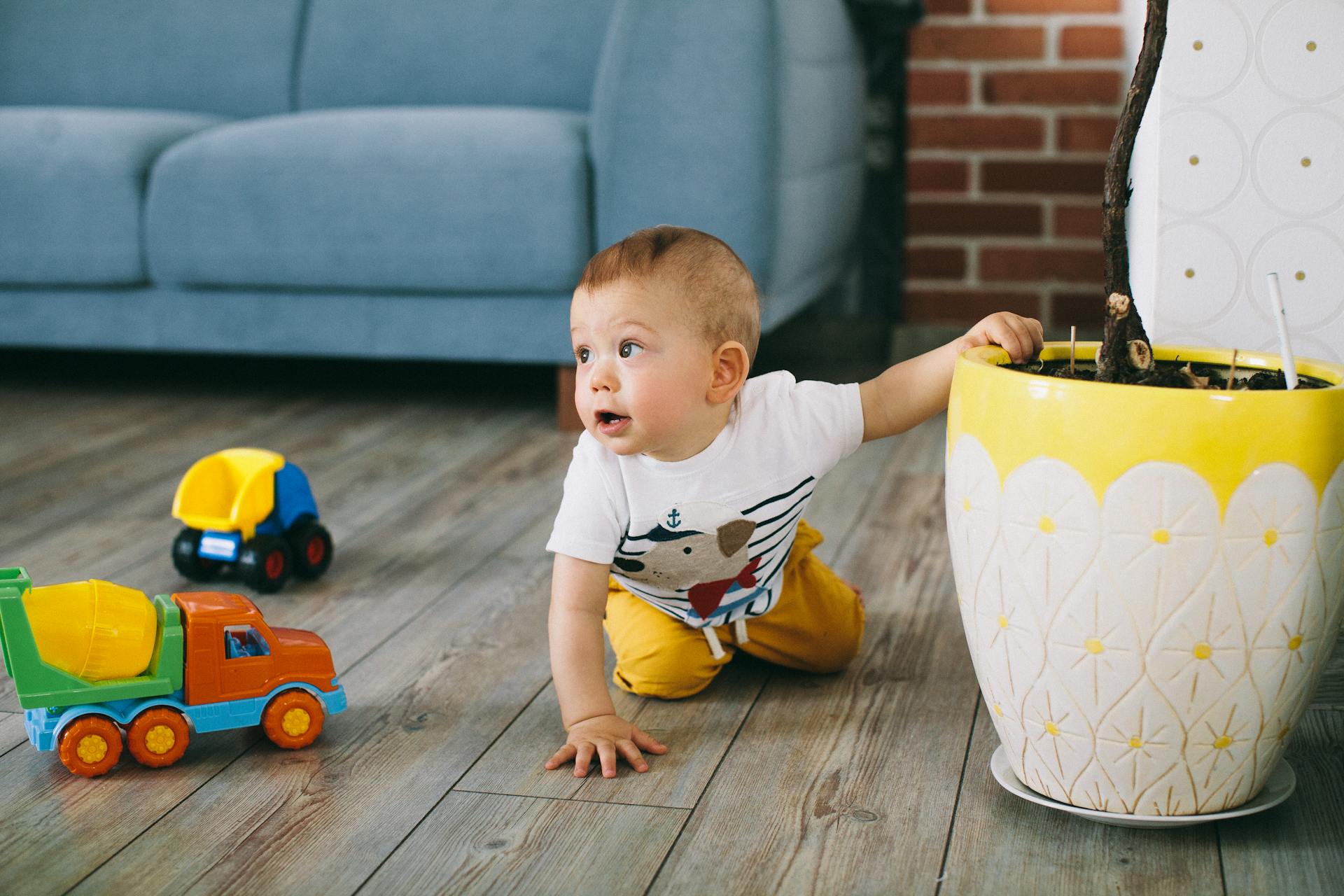
Daily use has a direct impact on how wood flooring ages. Homes with pets, children, or frequent foot traffic experience more surface contact, which increases the likelihood of scratches and visible wear.
Harder wood species and durable finishes help manage this wear more effectively. When material choice aligns with lifestyle demands, the floor maintains its appearance while supporting everyday activity.
Maintenance Expectations
Different wood floors require different levels of ongoing care. Oiled finishes often need periodic re-oiling to maintain protection, while lacquered surfaces usually require only routine cleaning.
Understanding these requirements early helps avoid frustration and poor maintenance habits. Clear expectations ensure the floor continues to look refined and performs well throughout its lifespan.
Choosing wood flooring becomes easier when these factors align with your space and lifestyle. When finish, installation, and environment work together, the floor performs well and ages with character rather than compromise.
Making Confident Wood Flooring Decisions
Understanding wood flooring types removes uncertainty from the decision process. When you know how construction, species, finishes, and grades behave, choices become clearer and more intentional.
Wood flooring shapes how a space feels from the moment you walk in. With clear guidance from a wood flooring expert, you can create a home that feels balanced, considered, and built to age beautifully, starting with a conversation that brings clarity to every step.

Warm Regards,
Pauline Madani
Founder & Managing Director Nordic Homeworx
Frequently Asked Questions
How should wood flooring be cleaned day to day?
▼The best way to clean wood floors for daily care is to use a soft broom, microfibre mop, or vacuum with a hardwood setting to remove dust and grit before they mark the surface. This simple habit helps preserve the finish and keeps the floor looking fresh without unnecessary wear.
Is wood flooring better than LVT?
▼Neither option is universally better. Wood flooring offers natural character, warmth, and long-term value that improves with age. LVT floors prioritise water resistance, low maintenance, and visual consistency. The right choice depends on how the space is used, daily wear expectations, and whether you prefer natural variation or practical performance.
Does wood flooring affect indoor air quality?
▼Yes. Properly finished wood flooring does not trap dust, allergens, or odours the way carpets can. This makes it a healthier option for indoor air quality, especially when combined with low-VOC finishes and regular cleaning.
Will wood flooring change colour over time?
▼Natural wood responds to light exposure and will develop a patina over time. Some species darken, while others lighten slightly. This change happens gradually and adds depth rather than looking uneven when furniture placement changes occasionally.
Can wood flooring be repaired without replacing the entire floor?
▼In many cases, yes. Scratches, dents, or worn areas can often be spot-repaired or refinished, depending on the finish and construction. This flexibility helps extend the floor’s lifespan without full replacement.