


Wood Knots in Flooring: Stability, Aesthetics, and Character Grades
May 25, 2026
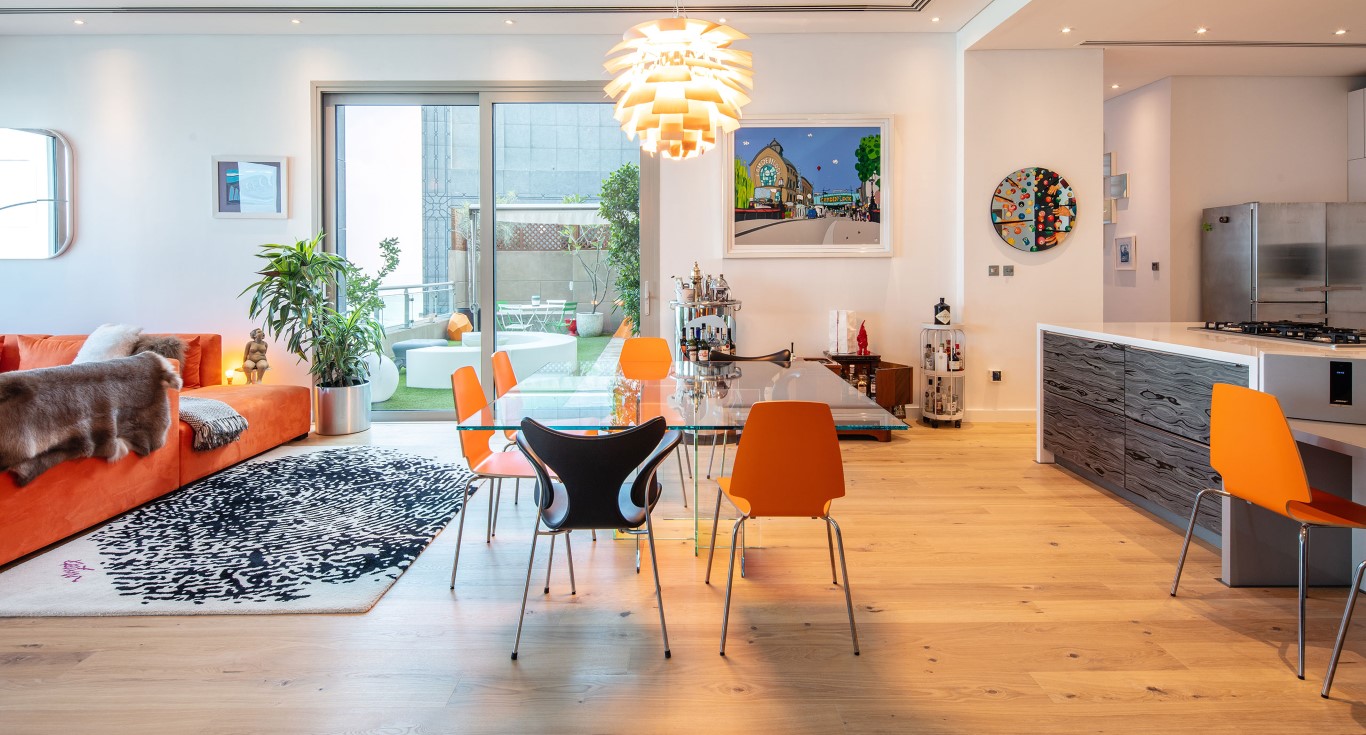
In this Dream Palm Residence home, white-washed oak flooring balances cleaner contemporary finishes with natural wood knot texture.
Key Takeaways
Wood knots are part of the tree’s original growth structure and remain one of the defining features that give real timber flooring its individuality and material depth.
- Prime and character grades differ in appearance rather than durability, with each suited to different spatial conditions and interior styles.
- Surface finishes such as brushing, matte treatments, and smoking significantly influence how visible timber markings appear across the floor.
- The most successful flooring specifications consider grade, finish, lighting, and room scale together rather than treating each decision separately.
No two timber boards are identical. That singularity is what separates real wood flooring from manufactured alternatives, and wood knots sit at the centre of that distinction. They mark where a branch once met the trunk, where growth redirected around a living structure, and where the tree left a permanent interruption within the grain pattern. In a properly manufactured engineered floor, a knot is not a flaw. It is evidence of the timber’s origin.
Understanding knots means understanding how flooring grades are shaped, how timber character develops across a board, and how a single specification decision can influence the atmosphere of a room.
What Are Wood Knots?
A wood knot forms where a branch once connected to the main trunk of the tree. As the tree continues growing, new layers of timber develop around that junction, enclosing the branch point within the board itself. This creates a localised interruption in the fibre direction, where the surrounding lines curve and compress rather than continuing in a straight formation.
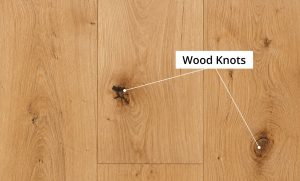
Because knots originate from the growth structure of the tree, their size, density, and distribution vary naturally from board to board. In engineered flooring, they are retained as part of the timber itself rather than removed entirely.
Types of Wood Knots Found in Flooring
Different knot types affect the appearance of a floor in different ways. Some remain tightly integrated within the surrounding timber, while others create stronger tonal contrast or more expressive patterning across the board.
Live Knots
Where fibres remain fully intergrown with the surrounding timber, the result is what is known as a live knot. These areas typically appear tighter and more cohesive, with smoother transitions between the centre and the adjacent wood.
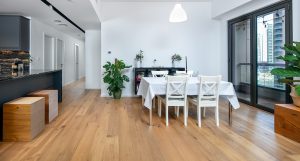
Character-grade Oak Ydre flooring introduces subtle wood knot variation throughout this renovated Rimal apartment.
Dead Knots
When a branch dies before the surrounding growth fully encloses it, a dead knot begins to form within the board. A darker perimeter ring often develops around the edge, creating more visible contrast across the timber surface. In premium flooring, these areas are commonly stabilised and filled during production.
Tight and Open Knots
Some formations remain firmly secured within the board with minimal separation from the surrounding wood. These are generally referred to as tight knots. Others create more visible recesses or voids, commonly described as open knots, and are usually filled with resin compounds to maintain stability while preserving the timber’s natural appearance.
Cluster Knots
Grouped concentrations of smaller markings are commonly classified as cluster knots. Rather than appearing in isolation, they create denser patterning across a board and contribute to a more expressive overall appearance once installed.
Oak flooring tends to display these characteristics more prominently than many other species due to its pronounced fibre structure and wider tonal range across the timber.
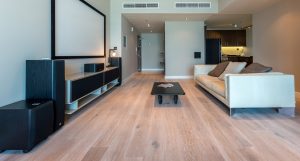
Oak Oyster flooring with subtle wood knot detail introduces a softer material contrast within the Elite Residence Apartment.
Do Knots Affect the Structural Performance of a Floor?
In properly manufactured engineered wood flooring, knots do not determine structural performance. Flooring grades are visual classifications rather than indicators of durability, meaning a prime-grade board and a character-grade board from the same collection are built to the same stability standards.
Long-term performance depends more on:
- Core construction and board composition
- Moisture control and acclimatisation
- Installation precision and subfloor preparation
The quality difference becomes more noticeable in the treatment of open formations. Lower-specification boards may experience filler separation over time, particularly in spaces exposed to changing humidity levels or heavier daily use. In premium flooring, these areas are stabilised more carefully for a cleaner and more consistent long-term result.
Prime vs Character Grade Wood Flooring
Timber grading describes how much of the wood’s natural character remains apparent within the finished board. It is a classification of appearance rather than structural performance.
| Flooring Feature | Prime Grade | Character Grade |
| Timber Selection | Cut from cleaner sections of the log with fewer visible interruptions | Preserves more of the tree’s natural markings and tonal variation |
| Knot Visibility | Minimal knot presence | Larger and more pronounced knots, including occasional filled areas |
| Overall Appearance | More uniform and restrained | Greater tonal and surface variation across the floor |
| Best Suited For | Minimal interiors, gallery-style spaces, and quieter open-plan layouts | Family homes, Scandinavian-inspired settings, and more relaxed residential spaces |
| Spatial Effect | Creates a calmer and more continuous floor surface | Introduces stronger contrast and a more layered appearance |
Character grade should not automatically be understood as rustic. A brushed, matte-finished oak floor with visible knots can still feel highly refined depending on the tone, finish, and wider architectural setting.
How Knot Visibility Shapes the Atmosphere of a Room
Because flooring extends across such a large portion of the room, the amount of visible variation influences how the space feels overall. A quieter floor surface allows the architecture and furnishings to take greater prominence, while stronger patterning across the boards introduces more movement and visual texture underfoot.
In practical terms, knot visibility often affects the atmosphere in subtle ways:
- Lower knot density creates a calmer overall impression
- More pronounced markings introduce greater visual activity
- Cleaner surfaces sit more subtly within open spaces
- Boards with stronger markings place greater emphasis on the timber itself
Neither approach is inherently better. The right specification depends on the scale of the room, the surrounding finishes, and the atmosphere the interior is intended to create over time.
How Surface Finishes Alter Knot Expression
The appearance of a floor changes significantly depending on the finish applied. The same board can feel quieter, softer, or more pronounced depending on how light interacts with the timber surface and how much texture remains visible after treatment.
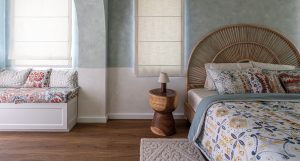
Within this Arabian Ranches residence, character-grade oak boards retain natural wood knot variation and tonal contrast throughout the bedroom.
Matte and Ultra-Matte Finishes
Lower-sheen finishes reduce glare and allow markings within the timber to appear more natural and less visually sharpened. This tends to suit boards with stronger visible character, where excessive reflection could make the floor feel overly active within the room.
Brushed Surfaces
Brushing removes softer fibres between the growth rings, creating a more textured board face. This process gives knots greater physical definition and increases the tactile quality of the floor underfoot.
Smoked and Darker Finishes
Smoking and deeper stains interact differently across denser areas of the timber, often producing stronger contrast around visible markings, creating greater tonal depth and less uniform colour throughout the surface.
Grade and finish are generally most successful when considered together as part of the same specification decision. Understanding how different wood floor finishes interact with natural timber variation helps create a result that feels more cohesive within the wider interior
Choosing Character Grade Flooring: Key Considerations
Character-grade flooring tends to work best when the surrounding conditions of the space are considered alongside the timber itself. Factors such as scale, lighting, and day-to-day use all influence how much visible detail a room can comfortably carry.
- Room proportion: Larger spaces generally carry stronger board markings more comfortably, particularly in open-plan layouts where the floor extends continuously across multiple areas. In smaller rooms, heavily patterned boards can feel visually crowded if combined with wider board formats or limited natural light. This becomes especially important when specifying wide wood plank flooring in more compact interiors.
- Lighting conditions: Directional sunlight and darker finishes often increase tonal contrast across the floor. Softer light and lower-sheen surfaces tend to produce a calmer and more balanced overall appearance.
- Daily use: Boards with brushed textures and more visible timber detail generally disguise minor dents, dust, and light scratching more effectively than smoother and more uniform surfaces.
- Interior palette: Character-grade flooring often works best alongside restrained finishes and quieter materials, allowing the timber to remain expressive without overwhelming the room.
Visible markings should not be understood as imperfections. In well-specified flooring, they contribute to a surface that settles more naturally into everyday residential use over time.
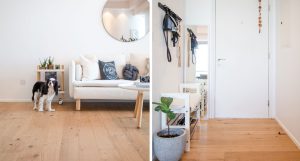
Oak Village boards with scattered wood knot markings balance the bright and minimal interior of this Goldcrest Views apartment.
Selecting a Flooring Grade That Fits the Space
The most successful flooring specifications respond to the conditions of the space rather than following a fixed aesthetic preference. Room scale, natural light, surface finish, and the amount of visible marking all influence which grade feels most appropriate once installed.
Prime-grade boards create a quieter overall impression, while character-grade selections introduce stronger contrast and a stronger material presence. Reviewing residential flooring projects across different architectural settings often makes these differences easier to understand in practice.

Warm Regards,
Pauline Madani
Founder & Managing Director Nordic Homeworx
Frequently Asked Questions
Do wood knots require special maintenance or cleaning?
▼Not necessarily, but the cleaning method should suit the texture of the floor. Character-grade boards with brushed surfaces or filled formations benefit from regular vacuuming with a soft brush attachment to remove fine debris from the grain detail. A lightly dampened microfibre mop and a pH-neutral wood floor cleaner are generally recommended over excessive water exposure.
Can engineered boards with larger markings be refinished?
▼Yes, provided the flooring has a sufficient wear layer. Premium engineered boards with visible wood knots can typically be sanded and refinished multiple times over their lifespan. During restoration, any filler within larger openings can also be repaired or re-stabilised before a new protective finish is applied.
Are character-grade floors with wood knots more expensive than prime grade?
▼In many cases, prime-grade flooring is actually more expensive. Cleaner boards with minimal visible markings are more selective and yield fewer usable sections from each log. Character-grade flooring retains more of the tree’s natural growth features, making production less restrictive while preserving the authenticity of the timber.
Do knots change appearance as the floor ages?
▼Like all natural timber, wood knots respond gradually to light exposure and oxidation. Over time, the surrounding wood often deepens slightly in tone, while the darker areas within the knot remain comparatively stable. This can soften the initial contrast across the floor and create a more blended overall appearance as the timber matures.
Can different flooring grades be combined in one installation?
▼Yes. In some projects, designers intentionally mix cleaner boards with more expressive selections to control how much visual activity appears across different areas of the home. This approach can work particularly well in larger residential layouts where certain spaces benefit from a calmer surface while others can accommodate stronger timber detail.